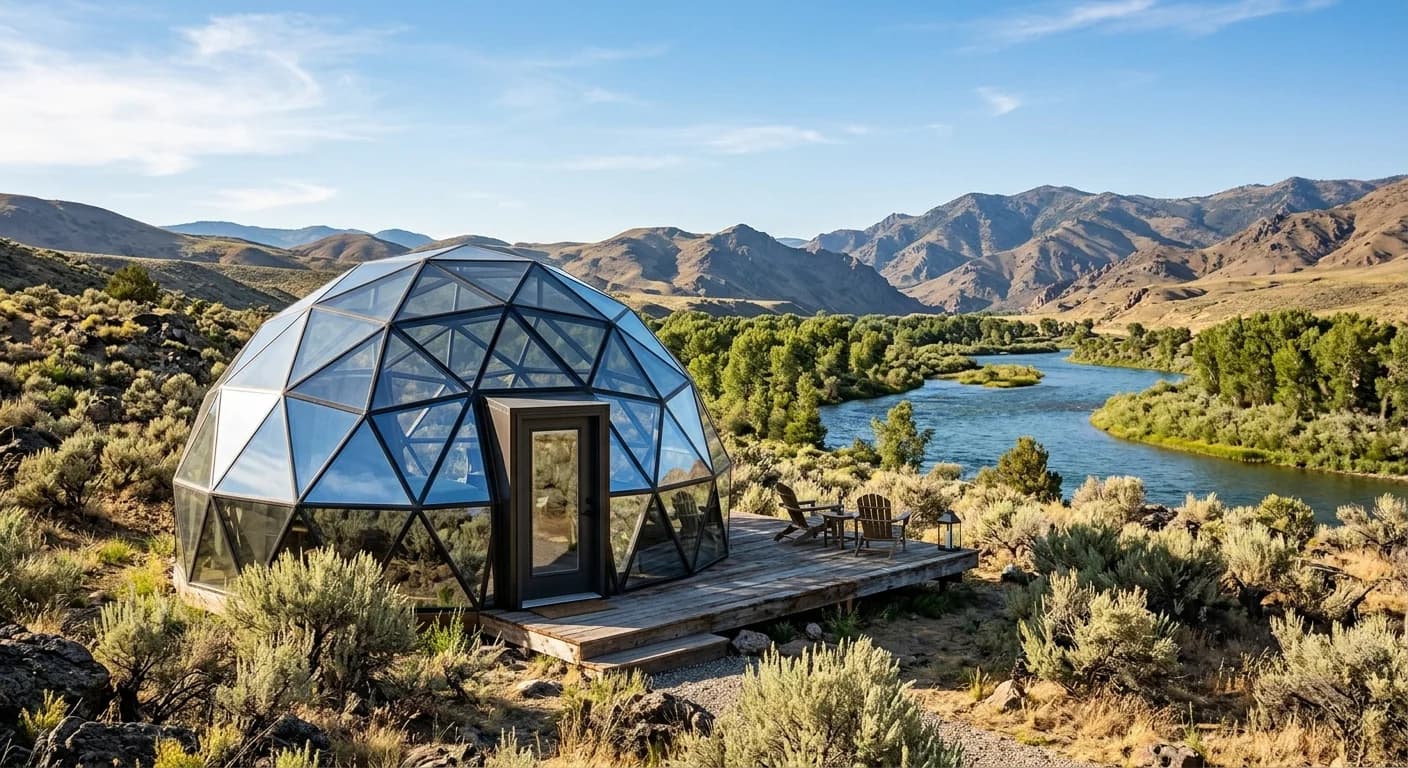
Idaho is quietly becoming one of the best glamping destinations in the American West. While Colorado, Utah, and Montana get most of the attention, Idaho offers something those states increasingly cannot: genuine solitude, dark skies, dramatic landscapes, and room to breathe — all without fighting crowds or paying resort-town prices.
From geodesic domes perched along the Snake River Canyon to yurts tucked into national forest land near McCall, luxury camping in Idaho spans an enormous range of terrain, climate, and experience. Whether you want a weekend escape from Boise or a week-long backcountry retreat, the state delivers.
This guide covers everything you need to plan an Idaho glamping trip — the best regions, accommodation types, what to expect, and how to choose the right experience for your style.
Why Idaho for Glamping
Idaho ranks as the seventh largest state by area but only the 39th by population. That ratio matters. It means vast stretches of public land, undeveloped river corridors, and mountain ranges where you can go an entire weekend without seeing another group. For glamping, this translates to a level of privacy and immersion that's increasingly rare in the lower 48.
The state's geography is remarkably diverse. Southern Idaho is high desert — volcanic rock, canyon country, and sagebrush steppe under enormous skies. Central Idaho is rugged mountain wilderness, including the Frank Church-River of No Return Wilderness. Northern Idaho is dense evergreen forest and lake country that feels more Pacific Northwest than Mountain West.
Each region offers a different glamping personality, meaning you can visit Idaho multiple times and have completely different experiences.
What sets Idaho apart from neighboring states:
- Lower cost of travel. Accommodation, food, and activities cost less than comparable options in Jackson Hole, Park City, or Whitefish. Same scenery, no resort markup.
- Less crowding. Idaho's national forests and BLM land see a fraction of the traffic that hits Yellowstone or Glacier gateway towns. Even the Sawtooth Valley feels spacious.
- Genuinely dark skies. Central and southern Idaho have some of the darkest skies in the country. The Craters of the Moon preserve and Snake River Plain are exceptional for stargazing.
- Four-season access. Unlike high-altitude destinations that shut down in winter, many Idaho glamping resorts operate year-round with heated accommodations.
- Hot springs. Idaho has more natural hot springs than any state except Alaska. Many are within easy reach of glamping properties, and some resorts incorporate thermal features into their amenities.
Types of Glamping Accommodations
Not all glamping is created equal. The term covers everything from a canvas tent on a wooden platform to a fully climate-controlled geodesic dome with king beds and private bathrooms. Knowing the differences helps you set the right expectations — and if you are new to glamping entirely, our glamping vs. camping comparison breaks down the key differences.
Geodesic Domes
Yurts
Treehouses
Safari Tents
Geodesic Domes
Geodesic domes are the flagship of modern luxury camping in Idaho. These engineered structures use a network of triangles to create a strong, weather-resistant shell that can handle snow loads, high winds, and temperature extremes — conditions that would compromise a tent or yurt.
What makes domes stand out is the interior. A well-designed glamping dome feels more like a boutique hotel room than a campsite. Expect real beds, climate control, private bathrooms, and panoramic windows or transparent panels that frame the landscape. The curved walls create an open, airy interior that's surprisingly spacious.
Domes work particularly well in Idaho's southern canyon country, where the structures can be positioned for dramatic views while remaining comfortable through hot summers and cold winters. The best dome resorts pair the accommodation with curated outdoor experiences — think private fire pits, stargazing decks, and access to hiking or river activities. For a detailed breakdown of dome types, sizes, and what they cost, see our geodesic dome glamping guide and the dome pricing breakdown.
Yurts
Yurts have a longer history in Idaho glamping and remain popular, especially in the mountainous central part of the state. Traditional-style yurts feature a circular wooden frame with a canvas or synthetic cover, a central skylight, and a wood stove for heating.
The experience is more rustic than a dome — you'll likely have a shared bathhouse rather than a private bathroom, and climate control depends on the stove rather than HVAC. But for people who want to feel closer to the elements while still sleeping in a real bed, yurts hit a sweet spot. They're also generally more affordable.
Idaho's backcountry yurt systems, particularly those accessible by skiing or snowshoeing in winter, are some of the best in the country.
Treehouses
A smaller but growing category in Idaho, treehouse glamping is concentrated in the more forested northern and central regions. These range from simple elevated platforms with canvas shelters to fully enclosed cabins built into the tree canopy with electricity, running water, and heated interiors.
The appeal is the elevation and the forest perspective — waking up at canopy level, surrounded by birds and filtered light. Availability is limited compared to domes or yurts, but the experiences tend to be memorable.
Safari Tents and Canvas Cabins
The most traditional form of glamping, safari-style tents and canvas cabins are essentially permanent tent structures with wood floors, real furniture, and varying levels of amenity. Some have private bathrooms and electricity; others are more basic.
These work well in Idaho's warmer months (June through September) but most properties close or winterize them during the cold season. They're a good entry point if you're curious about glamping but not ready to commit to a full dome or yurt resort.
Tiny Homes and Converted Structures
Some Idaho glamping properties use converted shipping containers, tiny homes, or renovated vintage structures (like airstreams or fire lookout towers). These blur the line between glamping and boutique lodging, but they share the common thread of being small-footprint, nature-immersed stays.
Best Regions for Glamping
Southern Idaho and the Snake River Canyon
Southern Idaho is emerging as the state's premier glamping destination, and the Snake River Canyon corridor is the reason. The canyon cuts through volcanic basalt for over 50 miles, creating a dramatic landscape of cliffs, waterfalls, and spring-fed rivers that feels almost otherworldly.
The Twin Falls area sits at the heart of this corridor. Shoshone Falls — taller than Niagara — anchors the eastern end, while the Thousand Springs area to the west features waterfalls emerging directly from canyon walls. The Perrine Bridge, one of the only places in the US where BASE jumping is legal year-round, spans the canyon right in town. For a deeper look at the area, see our complete Twin Falls travel guide.
Glamping in southern Idaho puts you in high desert terrain: warm summers with cool nights, mild spring and fall seasons, and winters that are cold but far less severe than Idaho's mountain regions. The area gets around 300 days of sunshine per year, making it one of the most reliable glamping destinations in the state for clear weather.
LuxeDen Resorts, opening in 2027, is bringing a new standard of geodesic dome glamping to the Twin Falls area. The property sits along the Snake River west of Twin Falls, with dome accommodations designed around panoramic canyon views, private outdoor spaces, Nordic-inspired wellness amenities including a Finnish sauna, and curated local experiences. It's the kind of property that's been missing from southern Idaho — luxury-caliber accommodation that actually matches the quality of the landscape.
The broader Magic Valley region also offers easy access to Craters of the Moon National Monument (about 90 minutes northeast), the City of Rocks National Reserve (about an hour south), and the vast BLM desert lands that are ideal for mountain biking, trail running, and exploring outdoor activities of all kinds. If you are planning a multi-day trip, our 3-day Twin Falls itinerary maps out a route that combines glamping with the area's best attractions.
Central Idaho and the Sawtooth Valley
The Sawtooth Valley is Idaho's most iconic mountain landscape — jagged granite peaks rising above alpine meadows, glacial lakes, and the headwaters of the Salmon River. Stanley, the tiny gateway town, has fewer than 100 year-round residents but serves as a base for some of the best backcountry glamping in the country.
Yurt and tent glamping operations in this area cater to people who want a mountain wilderness experience with a degree of comfort. Don't expect luxury resort amenities here — the Sawtooths are remote, and that's the point. What you get instead is some of the most stunning scenery in North America, virtually no light pollution, and access to world-class hiking, fishing, and hot springs.
The area is seasonal for most glamping operations (June through September), though some winter yurt programs operate for backcountry skiing.
Northern Idaho — Lakes and Forests
The Coeur d'Alene and Sandpoint areas in northern Idaho offer a different glamping flavor — think evergreen forests, large freshwater lakes, and a more Pacific Northwest feel. Properties here tend to be cabin-style or treehouse-based, with amenities oriented around lake recreation, mountain biking, and craft beer culture.
Northern Idaho is more developed and accessible than the central mountains, with better infrastructure for families and first-time glampers.
Eastern Idaho — Yellowstone Gateway
Eastern Idaho provides glamping access near some of the most famous natural attractions in the country. Properties near Driggs, Victor, and Island Park serve as bases for exploring Grand Teton and Yellowstone national parks while staying in something more interesting than a chain hotel.
The Teton Valley side (Driggs/Victor) is appealing for glampers who want mountain views and hiking access without paying Jackson prices for lodging. Properties range from safari tents to luxury yurts.
What to Expect at a Dome Resort
Since geodesic domes represent the higher end of the Idaho glamping spectrum, it's worth setting expectations for what a stay actually looks like.
Accommodation. A modern glamping dome is a climate-controlled, insulated structure with a solid floor, real walls, and a locking door. Most range from 300 to 600 square feet. You'll have a real bed (usually king or queen), seating, storage, and charging outlets. Higher-end properties include en-suite bathrooms with hot showers, some with soaking tubs.
Outdoor space. The best dome resorts give each unit a private outdoor area — a deck, fire pit, and seating at minimum. This is where you'll spend a lot of your time, especially in the evening. At properties in canyon or riverside settings, the outdoor space often provides the most dramatic views.
Amenities. This varies widely by property. Basic dome sites might offer little beyond the accommodation itself. Premium resorts layer in wellness features (saunas, hot tubs, cold plunge pools), curated dining, guided activities, and concierge-style trip planning. Some offer communal gathering spaces, while others focus entirely on privacy.
Technology. Expect Wi-Fi at most dome resorts, though bandwidth varies. Cell service depends entirely on location — southern Idaho canyon properties may have spotty coverage, which is either a feature or a bug depending on your perspective.
Meals. Some dome resorts include meal service or offer it as an add-on. Others provide kitchen facilities or outdoor cooking setups for self-catering. Properties near towns give you the option to dine out — the Twin Falls area has a growing farm-to-table restaurant scene that pairs well with a glamping stay.
Best Time to Visit
Idaho's glamping season depends heavily on which region and accommodation type you're targeting.
Spring (April through June). Southern Idaho is ideal in spring — wildflowers bloom across the high desert, the Snake River runs high from snowmelt (peak season for Shoshone Falls), and daytime temperatures are comfortable in the 60s and 70s. Dome and hard-sided accommodations are fully operational. Mountain regions are still snowed in through May, so central and northern Idaho glamping options are limited until late June.
Summer (July through September). This is peak season statewide. Every type of glamping accommodation is open, the weather is warm and dry, and the days are long — southern Idaho gets nearly 16 hours of daylight in late June. Summer is also the best time for river activities, hiking, and mountain biking. The tradeoff is higher demand and prices, particularly in August.
Fall (October through November). An underrated season for glamping in Idaho. Fall brings golden cottonwoods along river corridors, harvest-season produce, and noticeably fewer visitors. Southern Idaho stays comfortable through October, with cool nights perfect for fire pit evenings. Most tent-based glamping shuts down by late October, but dome and yurt properties operate well into November or year-round.
Winter (December through March). Year-round dome resorts really shine in winter. There's something genuinely magical about watching snow fall from inside a heated dome with panoramic windows. Southern Idaho winters are milder than the mountains — cold, but not extreme — and the region's proximity to Sun Valley makes it possible to combine a dome stay with skiing. Winter also brings the darkest skies for stargazing.
Stargazing and Dark Skies
This is one of Idaho's strongest selling points for glamping, and it deserves its own section because it genuinely changes the experience.
The Bortle scale measures sky darkness from 1 (darkest) to 9 (urban center). Most of southern and central Idaho registers at Bortle 1 or 2 — meaning you can see the Milky Way's galactic core with the naked eye and spot satellites crossing the sky.
Craters of the Moon National Monument, about 90 minutes northeast of Twin Falls, is an officially designated dark sky park. But you don't need to go that far — the Snake River Plain between Twin Falls and Shoshone offers exceptional stargazing right from a well-positioned glamping property.
What to look for in a dark-sky glamping experience:
- Location away from town lights. Even small towns create light domes. Properties several miles from the nearest settlement offer dramatically better viewing.
- Transparent dome panels or stargazing windows. Some geodesic domes incorporate clear panels in the roof or walls, letting you stargaze from bed. This is one of the most compelling features of dome glamping specifically.
- Open sightlines. Canyon rim properties that face away from towns toward open desert or wilderness offer the best horizons.
- New moon timing. The moon is the biggest source of natural light pollution. Planning your trip around a new moon phase (or at least avoiding full moons) makes a significant difference in what you can see.
Idaho glamping properties in dark-sky areas regularly host guests who've never seen the Milky Way before. It sounds overhyped until you're actually standing outside at midnight, looking up, and realizing the sky is nothing like what you see from home. For a deeper look at what makes Idaho's night skies exceptional and how to make the most of them, read our guide to stargazing and dark sky glamping in Idaho and our piece on the stargazing geodesic dome experience.
Pet-Friendly Glamping
Idaho is generally a dog-friendly state, and many glamping properties welcome pets — but the specifics vary significantly. If traveling with a dog, do your homework before booking.
What to check:
- Size and breed restrictions. Some properties limit dogs by weight or exclude certain breeds.
- Number of pets. Most pet-friendly glamping limits you to one or two dogs per unit.
- Leash policies. Even at pet-friendly properties, most require dogs to be leashed in common areas and never left unattended in accommodations.
- Pet fees. Expect an additional cleaning fee, typically $25 to $75 per stay.
- Surrounding land. One of the best things about glamping with a dog in Idaho is access to public land. Many properties border BLM land, national forest, or state land where dogs can explore (on leash or under voice control, depending on regulations).
Dome resorts tend to be selective about pets because the interiors include furnishings that need to stay in good condition. Some offer pet-specific units or adjacent pet areas rather than allowing dogs in every dome. It's always better to call ahead than to assume.
For a deeper dive into traveling with pets to a glamping property, including what to pack and how to prepare your dog for the experience, check out our pet-friendly glamping guide.
Good areas for pet-friendly glamping in Idaho:
- Southern Idaho / Twin Falls area. Extensive BLM land, canyon rim trails, and the Snake River corridor offer great dog-walking terrain. Several area properties accommodate pets.
- McCall area. Payette Lake and surrounding national forest land are dog-paradise in summer.
- Boise foothills. Properties near the Boise Ridge to Rivers trail system give dogs miles of connected trails.
What to Pack
Packing for glamping is different from both hotel travel and tent camping. You're spending significant time outdoors in variable conditions.
Essentials for any Idaho glamping trip:
- Layers. Even in summer, Idaho's high desert cools rapidly after sunset. A 90-degree day can turn into a 55-degree night. Bring a warm fleece or down layer, even in July.
- Sturdy footwear. You'll be walking on natural terrain — volcanic rock, dirt trails, riverbanks. Trail shoes or hiking boots, not just sandals.
- Sun protection. Southern Idaho's elevation (around 4,000 feet near Twin Falls) means stronger UV exposure than you might expect. Sunscreen, sunglasses, and a hat are non-negotiable.
- Headlamp or flashlight. Even at resorts with pathway lighting, you'll want your own light source for navigating between your accommodation and outdoor areas after dark.
- Binoculars. For stargazing, wildlife watching (raptors are abundant in the Snake River Canyon), and general landscape appreciation.
- Reusable water bottle. Idaho air is dry. You'll drink more water than usual, especially at elevation.
Season-specific additions:
- Winter: Insulated boots, heavy coat, hand warmers, thermal base layers. The walk from your car to your dome in January demands real cold-weather gear.
- Spring/Fall: Rain jacket, mid-weight insulation, mud-appropriate footwear.
- Summer: Swimsuit (for rivers, hot springs, or property pools), quick-dry clothing, insect repellent.
For a comprehensive packing list organized by season and activity type, see our glamping dome packing guide.
What you probably don't need to bring:
- Camping gear. No tent, sleeping bag, or cooking equipment unless your specific property requires it (check before packing).
- Bedding and towels. Any property calling itself a glamping resort provides these.
- Firewood. Most properties with fire pits supply wood or sell it on-site. Transporting your own firewood can actually spread invasive insects and is discouraged or prohibited in some areas.
Plan Your Idaho Glamping Trip
Idaho glamping ranges from rustic yurt stays in the backcountry to full-service dome resorts with every comfort. The right choice depends on what you're after — wilderness immersion, romantic getaway, family adventure, or something in between.
If you're drawn to the idea of luxury camping in Idaho's southern canyon country — geodesic domes with real beds, private outdoor spaces, dark-sky stargazing, and Nordic wellness amenities — LuxeDen Resorts is opening near Twin Falls in 2027. VIP reservations are available now for guests who want first access to opening-season dates.
For couples planning a romantic glamping getaway in Idaho, the combination of private dome accommodations, fire pit evenings, and dramatic canyon scenery is hard to beat. And if you're weighing Idaho against other Western states, our Idaho vs. Utah glamping comparison breaks down the differences in terrain, cost, and experience.
Quick planning checklist:
- Choose your region based on the experience you want: canyon country (south), mountain wilderness (central), lake and forest (north), or national park access (east).
- Book early for summer. Peak season (July-August) fills up fast, especially at smaller properties with limited units. Shoulder seasons offer better availability and lower prices.
- Check the accommodation type carefully. "Glamping" means different things at different properties. Read reviews, look at photos, and call ahead if you have specific questions about amenities, bathrooms, or climate control.
- Plan for the drive. Idaho is a big state with limited highways. Build travel time into your itinerary, especially for central and eastern destinations.
- Consider combining regions. A road trip pairing a dome stay near Twin Falls with a yurt night in the Sawtooths covers two very different landscapes in one trip. See our guide on getting to Twin Falls for route planning.
Idaho's glamping scene is still young, which is part of what makes it exciting. The state has always had the landscapes — now it's getting the accommodations to match.