The word "glamping" gets thrown around loosely. Some people use it for any campsite with a flush toilet. Others reserve it for climate-controlled structures with king beds and espresso machines. The reality covers a wide spectrum, and understanding where your stay falls on that spectrum matters more than the label itself.
This is an honest breakdown of what glamping actually involves compared to traditional camping — the tradeoffs, the costs, and who each option genuinely serves best.
What Glamping Actually Means
Glamping is not "camping with nicer gear." The fundamental difference is structural. Traditional camping means you bring your shelter — tent, sleeping bag, pad, the works. Glamping means the shelter is already there, built and furnished before you arrive.
That distinction changes everything downstream. When you don't need to set up camp, you don't need to haul gear. When the structure is permanent, it can have insulation, plumbing, electricity, and heating. When it has those systems, it can offer amenities that are physically impossible in a tent.
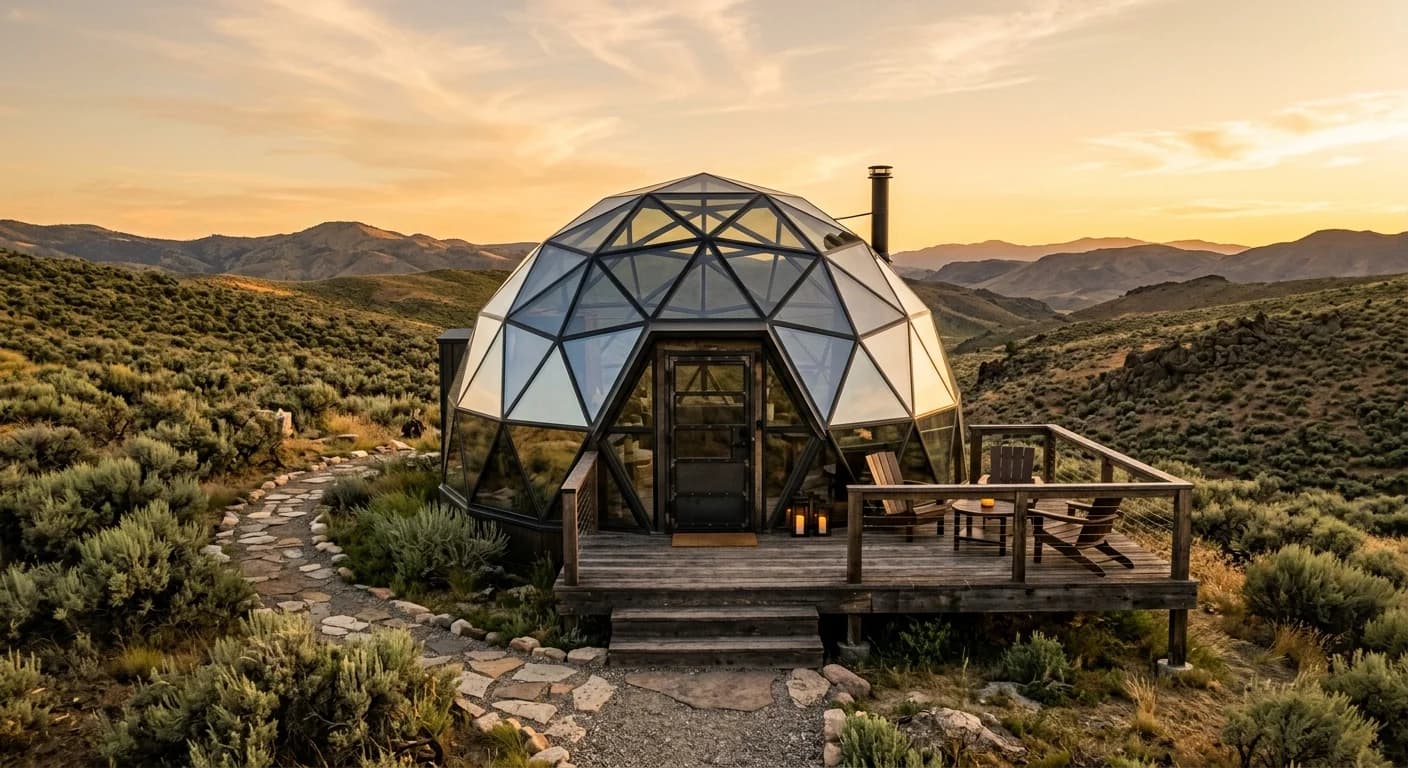
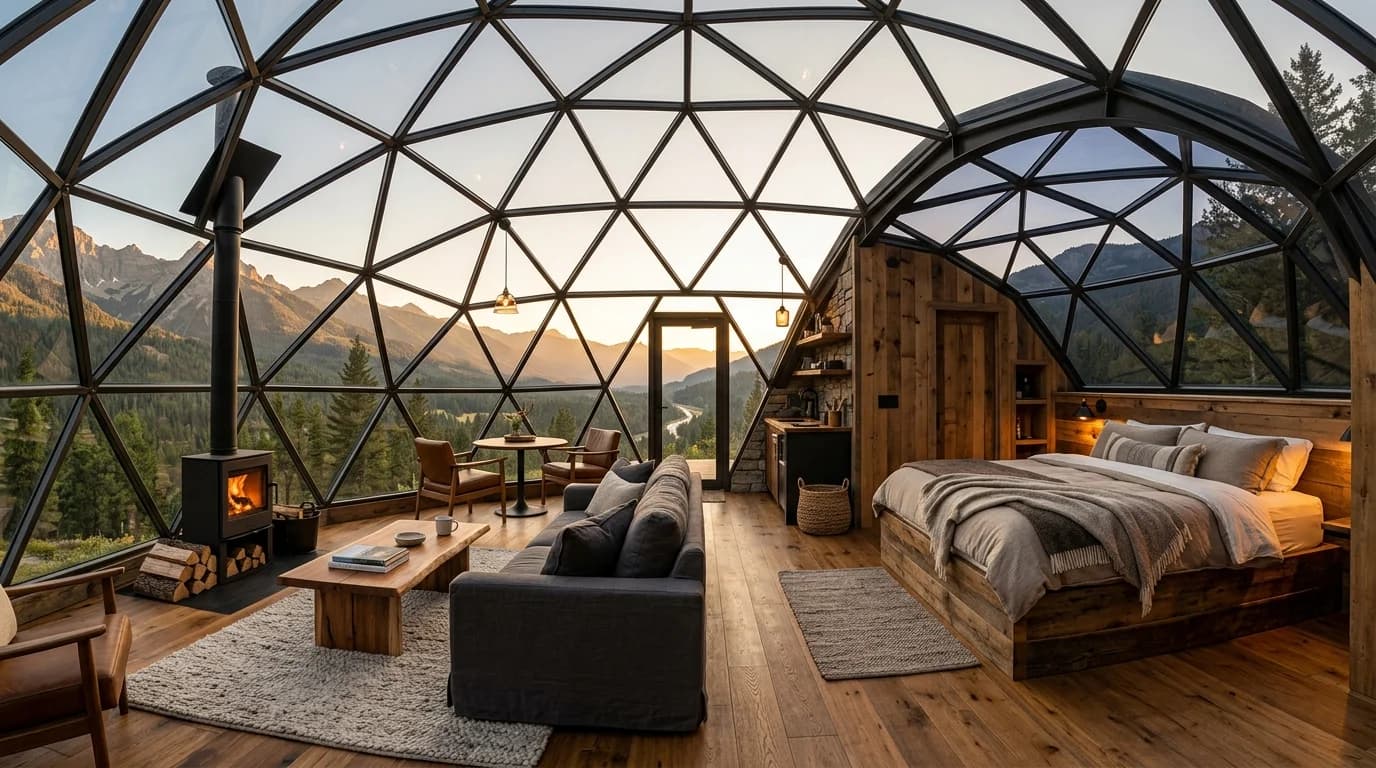
A geodesic dome with a private hot tub, heated floors, and a full kitchen is still "in nature." You still hear coyotes at night, watch the stars through panoramic windows, and wake up to mountain air. But the experience of being in nature is fundamentally different when you slept on a real mattress and can make coffee without finding your camp stove.
The Glamping Spectrum
Not all glamping is created equal. The category spans a wide range:
Basic glamping ($75-150/night): Pre-pitched canvas tents on platforms with real beds. Shared bathrooms. Maybe electricity for lights and charging. Think summer camp for adults.
Mid-range glamping ($150-250/night): Yurts, cabins, or basic domes with private bathrooms, kitchenettes, and climate control. Comfortable furnishings. Some outdoor amenities like fire pits.
Luxury glamping ($250-400/night): Geodesic domes, treehouses, or architect-designed structures with full kitchens, premium bedding, private hot tubs, saunas, and curated interiors. The kind of place where the bathroom has better fixtures than your house.
Ultra-luxury glamping ($400+/night): Resort-level service in wilderness settings. Concierge, private chefs, spa treatments, guided excursions. The structure is a destination, not just a place to sleep.
Where you land on this spectrum determines how your experience compares to traditional camping.
Head-to-Head Comparison
Sleeping
Camping: Sleeping pad on the ground (or in a hammock). Sleeping bag rated to the temperature you expect. You feel every rock you missed during setup. Temperature regulation means adding or removing layers inside your bag.
Glamping: A real bed with a real mattress, sheets, and pillows. Climate-controlled space — thermostat, not layers. You sleep like you do at home, except the view when you open your eyes is a mountain ridge instead of a wall.
Cooking
Camping: Camp stove, cooler with ice, limited ingredients, cleanup with camp soap and a collapsible basin. Meals are planned around what stores well without refrigeration and cooks on a single burner.
Glamping: Ranges from a basic kitchenette (mini-fridge, hot plate, coffee maker) to a full kitchen with a stove, oven, and proper refrigerator. You can cook anything you'd cook at home. Some luxury sites stock welcome baskets with local provisions.
Bathrooms
Camping: Campground restrooms (best case), vault toilets (common), or a trowel and the woods (backcountry). Showers are a campground luxury, not a guarantee.
Glamping: Private bathroom with running water, flush toilet, and a shower — sometimes a rain shower with better water pressure than your apartment. Luxury glamping adds heated floors, quality towels, and actual toiletries rather than a bar of camp soap.
Weather
Camping: You feel it all. Rain drumming on nylon two inches from your face. Wind testing every stake and guyline. Heat with no escape except shade. Cold that seeps through even a good sleeping bag. Weather is not a backdrop — it is the experience.
Glamping: Weather becomes something you observe rather than endure. Rain on a dome's panoramic windows is atmospheric. A snowstorm is beautiful when you are watching it from a heated space with a cup of coffee. You can still go outside and experience it, but you choose when.
Packing
Camping: The gear list is its own project. Tent, sleeping bag, pad, stove, fuel, cookware, headlamp, first aid kit, rope, tarp, water filtration — and that is the abbreviated version. Forgetting one item can derail the trip.
Glamping: Pack like you are going to a cabin. Clothes, toiletries, food if you plan to cook. Everything else is already there. The difference in car space alone is dramatic — a weekend glamping trip fits in an overnight bag.
Connection to Nature
Camping: Total immersion. No walls between you and the environment. You hear, smell, and feel everything. There is an undeniable rawness to waking up in a tent surrounded by wilderness.
Glamping: Curated immersion. Panoramic windows frame the landscape. Private decks extend your living space outdoors. You are in nature but not exposed to it. Some argue this is less authentic. Others argue that comfort lets you actually appreciate the surroundings instead of focusing on survival logistics.
Real Beds & Linens
Private Bathrooms
Climate Control
Full Kitchens
Private Hot Tubs
No Gear Required
Amenities That Define the Experience
The amenities gap between camping and glamping is where the comparison gets most stark.
Hot Tubs
A private outdoor hot tub is one of the most sought-after glamping amenities — and for good reason. Soaking in hot water under open sky, surrounded by forest or mountains, with stars overhead is a fundamentally different experience from a hotel spa. Glamping with a hot tub transforms the stay from "sleeping somewhere nice" into a genuine retreat. You use it before bed, first thing in the morning, after a hike, during a rainstorm. It becomes the anchor of the trip.
Traditional camping offers nothing comparable. You might find a natural hot spring nearby, but that requires driving, sharing with strangers, and hoping it is not overcrowded.
Real Beds
This matters more than most people expect. After a day of hiking, kayaking, or simply being outdoors, the quality of your sleep determines the quality of the next day. A proper mattress with clean sheets is not luxury for its own sake — it is functional recovery.
Private Bathrooms
Having a bathroom ten steps from your bed at 2 AM in January versus putting on boots and walking to a campground restroom in the dark is not a small difference. It is the difference between a trip everyone enjoys and a trip someone tolerates.
Kitchenettes and Full Kitchens
The ability to store fresh food, cook real meals, and brew proper coffee changes the rhythm of a trip. No more planning every meal around what fits in a cooler. No more eating rehydrated backpacker meals unless you want to.
Fire Pits
Both camping and glamping offer fire pits, but glamping fire pits often include seating, are positioned for views, and come with firewood provided. The fire is a feature, not a chore.
WiFi and Connectivity
Many glamping sites offer WiFi. Whether that is a benefit or a drawback depends on your perspective. For families with kids who need occasional screen time, or for remote workers extending a trip, it matters. For people seeking total disconnection, it is easy to ignore.
Who Glamping Is Really For
Couples
Glamping with a hot tub is, straightforwardly, romantic. A private dome with a soaking tub, a fire pit, a comfortable bed, and no neighbors visible is a better date than most restaurants. The setting does the work.
Families with Young Kids
Traditional camping with children under six is an endurance test. Kids need bathrooms urgently and at inconvenient times. They need climate control to sleep. They need a space that is safe to explore without constant supervision. Glamping provides all of this while still delivering the outdoor experience parents want their kids to have.
First-Time Outdoor Travelers
If someone has never spent a night outdoors and you hand them a tent, the learning curve is steep and the experience can be discouraging. Glamping removes the skill barrier. You get the nature, the stars, the campfire, the morning mist — without needing to know how to read a weather forecast or set up a rain fly.
People Who Want Nature Without Roughing It
This is not a criticism. Not everyone finds discomfort meaningful. Some people genuinely connect with nature more deeply when they are rested, warm, and comfortable. Glamping serves them honestly.
Experienced Campers Who Want a Break
Even lifelong campers sometimes want a weekend outdoors without the setup, teardown, and gear maintenance. Glamping is not a replacement for camping — it is a complement.
Cost Comparison
Here is the honest math:
Traditional camping:
- Campsite: $10-35/night (public land can be free)
- Gear (if you own it): $0 per trip (amortized over years)
- Gear (if buying): $300-1,500 for a complete setup
- Food: Similar to home cooking costs
- Total per night: $10-35 (once you own gear)
Glamping:
- Nightly rate: $100-400/night depending on level
- Gear: None needed
- Food: Similar to home cooking costs
- Total per night: $100-400
Glamping costs 5-10x more per night than camping. That is the reality. But the comparison is incomplete without context:
Hotel comparison: A decent hotel in a tourist area runs $150-250/night. Mid-range glamping costs roughly the same but delivers an experience a hotel cannot — private outdoor space, nature immersion, unique architecture, and amenities like private hot tubs that hotels charge extra for.
True cost of camping: If you camp three times a year, your gear costs amortize quickly. If you camp once and the tent collects dust in the garage, those "cheap" camping nights actually cost more than glamping when you factor in unused gear.
Value per hour: You use a hotel room to sleep. You use a glamping site all day — the deck, the hot tub, the fire pit, the views. The cost per hour of enjoyment is often lower than it appears.
Is Glamping Worth It?
The honest answer: it depends entirely on what you value.
Glamping is worth it if you:
- Want nature without the logistics
- Travel with people who would not enjoy traditional camping
- Value comfort as part of the experience, not a compromise
- Want a unique stay that feels like an event, not just accommodation
- Are looking for glamping with a hot tub for a couples retreat or special occasion
Traditional camping is better if you:
- Find genuine satisfaction in self-sufficiency outdoors
- Want maximum budget efficiency
- Prefer backcountry access (glamping sites are drive-in)
- Already own gear and enjoy using it
- Want the rawest possible connection to the environment
Neither option is objectively better. They serve different needs, different moods, and different stages of life. The best outdoor travelers often do both — camping when they want the challenge, glamping when they want the restoration.
Find Your Version of Outdoors
Whether you lean toward a tent under the stars or a dome with a hot tub, the point is getting outside. The method matters less than the doing.
Curious what luxury glamping actually looks like? Join the VIP list for early access to LuxeDen Resorts — geodesic domes with private hot tubs, nestled along the river near Twin Falls, Idaho. Opening Summer 2027.
Keep Reading
- Geodesic Dome Glamping Prices Guide -- What dome stays cost and what is included at each price tier.
- Camping Near Twin Falls -- The best campgrounds and outdoor stays near the Snake River Canyon.
- Romantic Glamping Getaways in Idaho -- Plan a couples retreat with hot tubs, fire pits, and dark sky stargazing.
- Idaho Glamping Guide -- Every glamping option across the state, from basic to luxury.