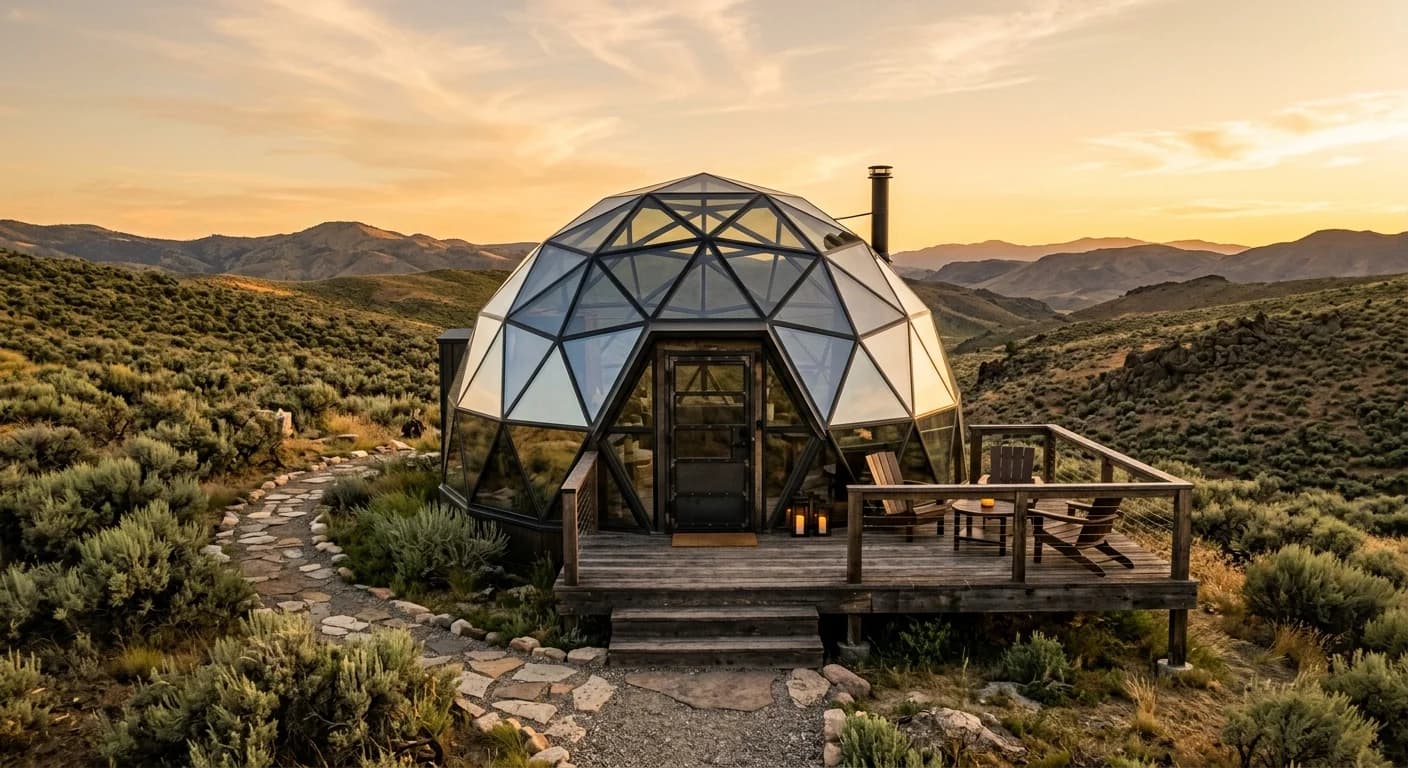
The first time you step inside a geodesic dome, the geometry does something unexpected to your brain. The curving walls erase the hard corners you associate with buildings. The panoramic windows pull the landscape inward. If the dome has a transparent ceiling panel, the sky becomes part of the room. It feels less like checking into a hotel and more like inhabiting a soap bubble that someone furnished with a king bed and a wood stove.
Geodesic dome glamping has gone from architectural curiosity to one of the fastest-growing segments of outdoor hospitality. The appeal is not complicated: you get the immersion of camping with the comfort of a boutique hotel, wrapped in a structure that looks like it was designed by a futurist who also happened to love the woods.
This guide covers everything you need to know before booking your first dome stay — the engineering behind the shape, what luxury domes actually look like inside, how to find the right one, and what it costs.
What Is a Geodesic Dome?
The geodesic dome is a spherical structure made of interlocking triangles. The design distributes structural stress evenly across the entire surface, which means a dome can span large areas without interior columns or load-bearing walls. The result is a wide-open interior wrapped in a remarkably strong shell.
Buckminster Fuller popularized the design in the 1950s and '60s, famously proposing a two-mile dome over Midtown Manhattan. That never happened, but the structural principles proved sound at every scale. The US military adopted geodesic domes for radar installations in the Arctic. The Montreal Biosphere, built for Expo 67, still stands as the most recognizable geodesic dome on the planet.
What makes the geometry work for glamping is the strength-to-weight ratio. A geodesic dome tent can withstand high winds and heavy snow loads while using a fraction of the material a conventional building requires. The triangular panels can be opaque, transparent, or a mix of both — which is how you get those stunning glass-ceiling domes designed for stargazing.
Modern glamping domes are typically between 20 and 35 feet in diameter, offering 300 to 1,000 square feet of interior space. They arrive at a property as prefabricated panel kits and can be assembled on a raised platform in a matter of days, not months. This ease of construction is part of why dome glamping has scaled so quickly across rural and wilderness properties.
Why Domes Are Trending for Glamping
The numbers tell the story: search interest in geodesic dome glamping has surged nearly 500% in recent years, and the trend shows no sign of cooling. Several forces are driving the growth.
Visual impact. Domes photograph extraordinarily well. The curved interiors, the panoramic windows, the play of natural light — they produce the kind of images that stop a thumb mid-scroll. Social media has turned dome stays into aspirational content, which drives bookings, which funds more domes. The cycle is self-reinforcing.
Post-pandemic travel preferences. The shift toward private, nature-immersive lodging that started in 2020 has become a permanent feature of the travel market. Domes deliver on that preference. You get a self-contained unit, usually spaced well away from other guests, in a natural setting. No shared hallways, no lobby crowds, no elevator buttons.
The experience gap they fill. Traditional camping requires gear, skills, and a tolerance for discomfort. Hotels offer comfort but disconnect you from the landscape. Dome glamping sits directly in the gap: you fall asleep watching the Milky Way, but you also have heated floors, a real mattress, and a pour-over coffee setup in the morning.
Accessible adventure. Not everyone can or wants to backpack into the wilderness. Geodesic dome resorts make dramatic natural settings accessible to a wider range of travelers — couples, families with young children, older adults, people with mobility considerations. The experience adapts to the guest, not the other way around.
Inside a Luxury Glamping Dome
The interior of a high-end glamping dome will surprise people who associate "camping" with sleeping bags on the ground. Modern dome glamping properties compete directly with boutique hotels on comfort while offering something hotels structurally cannot: an immersive connection to the surrounding landscape.
King Bed & Premium Linens
Private Bathroom
Climate Control
Kitchenette
Panoramic Glass
Living Space
Sleeping
Most luxury domes feature a king or queen bed with hotel-quality linens — think high thread-count sheets, down comforters, and stacked pillows. The bed is typically positioned to face the largest window panel or the transparent ceiling section. Some properties offer lofted sleeping areas for additional guests.
Bathrooms
This is where dome properties diverge. Basic setups might direct you to a shared bathhouse nearby. Mid-range domes often include an attached private bathroom with a composting or low-flow toilet and a hot shower. Top-tier dome resorts build the bathroom into the dome itself or connect it via a short enclosed walkway, with rain showers, vanities, and heated floors.
Kitchenettes
Full kitchens are rare in dome glamping — the circular floor plan and the emphasis on views limit cabinetry space. What you will commonly find is a kitchenette: a mini fridge, a two-burner cooktop or hot plate, a coffee maker, and basic cookware. Many properties supplement this with outdoor grills, fire pits for cooking, or on-site dining options.
Climate Control
Luxury domes are not tents in disguise. Modern geodesic structures include mini-split HVAC systems, radiant floor heating, wood-burning stoves, or some combination. The dome shape is inherently efficient for heating — warm air circulates naturally within the curved space rather than pooling at a flat ceiling.
Living Space
The open floor plan of a dome creates a single flowing space. Expect a sitting area with comfortable seating, often a small dining table, ambient lighting, and usually a Bluetooth speaker or sound system. The absence of corners gives the interior a calming quality that is hard to articulate until you experience it.
Glass and Sky
The defining feature of dome glamping is the relationship with the outdoors. Floor-to-ceiling window panels, transparent roof sections, and wraparound views transform the dome into something closer to a terrarium for humans. You watch storms roll in. You wake to sunrise painting the walls. At night, the dome becomes a private observatory.
Stargazing from a Dome
If there is a single experience that sells dome glamping to first-timers, it is stargazing from bed. The transparent ceiling panels on many geodesic dome designs turn the structure into a planetarium. You lie back, look up, and the sky fills your vision without a tent zipper in the way and without the cold air on your face.
The quality of the stargazing depends entirely on the dome's location. Properties in rural areas with minimal light pollution — and there are many — offer views that urban dwellers rarely see. The Milky Way becomes visible as a dense band across the sky. Satellites track silently across the dome panels. On clear nights at high-altitude or desert locations, you can lose track of time watching the sky shift.
Some dome resorts enhance the experience with stargazing guides, telescope rentals, or astronomy apps pre-loaded on in-dome tablets. A few properties in the American West time their openings around meteor shower seasons or new moon weekends for peak dark-sky conditions.
Worth noting: if you are a light sleeper, the transparent panels also mean early morning sun. A quality sleep mask is a small investment that pays for itself on a dome trip.
Year-Round Comfort
One of the most common questions about geodesic dome glamping is whether the domes are comfortable outside of summer. The short answer is yes — and in many cases, the off-season experience is better.
Insulation
Modern glamping domes use multi-layer insulation systems. The outer shell is typically a PVC or ETFE membrane rated for UV exposure and weather resistance. Beneath that, closed-cell foam or spray-applied insulation creates a thermal barrier. Some high-end domes use double-wall construction with an air gap for additional insulation.
The dome shape itself contributes to thermal efficiency. A sphere encloses the maximum volume for a given surface area, which means less surface is exposed to the elements per square foot of living space compared to a rectangular structure.
Heating
Winter dome stays are where the experience genuinely shines. A wood stove anchoring the center of a dome while snow falls against the transparent panels is an image that stays with you. Modern domes also use mini-split heat pumps, radiant floor heating, or propane heaters. Properties in cold climates typically provide multiple heating options so guests can maintain comfortable temperatures even in sub-zero conditions.
Cooling
Summer heat management depends on the location. Domes in forested or high-altitude settings benefit from natural shade and cooler ambient temperatures. In warmer climates, properties use reflective exterior coatings, powered ventilation fans at the dome apex, mini-split AC units, or strategically placed operable windows that create cross-ventilation. The curve of the dome helps — hot air rises to the peak and can be vented efficiently.
Wind and Weather
The aerodynamic profile of a geodesic dome is its structural superpower. Wind flows around the curved surface rather than pushing against a flat wall. Well-engineered glamping domes are rated for winds exceeding 100 mph and can handle substantial snow loads. Guests sometimes report being surprised at how quiet the interior remains during storms — the triangulated structure eliminates the flapping and flexing that plague traditional tents.
How to Find Dome Glamping
Searching for geodesic dome glamping near me will surface options, but the quality and type of results vary significantly depending on where you look.
Glamping Aggregator Sites
Platforms like Glamping Hub, Hipcamp, and Tentrr specialize in outdoor accommodations and curate dome listings with detailed descriptions, photos, and verified reviews. These sites tend to attract dedicated glamping properties rather than casual hosts, so the average quality is higher. Filters for "dome" or "geodesic" are standard.
Airbnb and VRBO
Searching for glamping domes on Airbnb returns hundreds of results, ranging from bare-bones dome tents on someone's back acre to fully appointed luxury domes on professional resort properties. The advantage is volume and geographic coverage. The challenge is filtering signal from noise — read reviews carefully, check the photo count, and look for Superhost status as a quality indicator. VRBO carries similar listings with more emphasis on family-friendly properties.
Direct Booking with Resorts
The highest-end dome glamping experiences tend to come from dedicated resort properties that operate their own booking systems. Direct booking usually offers the best rates (no platform fees), more flexible cancellation policies, and access to add-on experiences like guided hikes, spa services, or meal packages. If you find a dome resort you like on a platform, check whether they have a direct website before booking.
Google Maps
Sometimes the simplest approach works. Searching "dome glamping" or "geodesic dome resort" in Google Maps surfaces local results with reviews, photos, and direct links. This is especially useful for finding newer properties that have not yet built a presence on the major platforms.
Cost Breakdown
Dome glamping pricing spans a wide range depending on location, amenities, season, and the property's positioning. Here is what to expect across the market.
Budget dome glamping ($75-$150/night): Basic geodesic dome tents on platforms with shared bathhouse facilities, minimal furnishings, and BYO bedding in some cases. These are often found on Hipcamp or smaller Airbnb listings. The dome itself is the experience — do not expect hotel amenities.
Mid-range dome glamping ($150-$350/night): Private bathroom (attached or nearby), comfortable bedding provided, kitchenette, heating, and some level of interior design. This is where most glamping domes on Airbnb and Glamping Hub fall. Solid value for couples or small groups.
Luxury dome glamping ($350-$700+/night): Full resort experience. High-end furnishings, private hot tubs, gourmet meal options, curated interiors, premium bedding, dedicated concierge or host services, and thoughtful details like telescopes, record players, or outdoor soaking tubs. These are the properties that show up in travel magazine features.
Peak vs. off-season: Expect a 20-40% premium during summer months and holiday weekends at most properties. Shoulder season (spring and fall) often delivers the best balance of price, weather, and availability. Winter stays at properties equipped for cold weather can be surprisingly affordable and remarkably atmospheric.
Additional costs to factor in: Some properties charge cleaning fees ($50-$150), pet fees if applicable, and fees for add-on experiences like guided tours or spa services. Direct-booking properties sometimes bundle these into the nightly rate.
What to Pack
Packing for a dome glamping trip is closer to packing for a boutique hotel stay than for a camping trip, but with a few important differences.
Layers. Even in summer, temperatures can swing 30 degrees between afternoon and night at rural and high-altitude dome locations. Bring a warm mid-layer and a light jacket regardless of season.
Sleep mask. If your dome has transparent ceiling panels, you will want this. Morning light comes early and from every direction.
Binoculars. Useful for wildlife, stargazing, and taking in the surrounding landscape from the dome's panoramic windows.
Headlamp or small flashlight. Dome properties are often set back from main roads, and paths between the dome and common areas may not be fully lit at night.
Comfortable outdoor footwear. You will be walking between the dome and parking areas, fire pits, hot tubs, and common spaces on natural surfaces. Sturdy sandals or trail shoes beat flip-flops.
Minimal toiletries. Most luxury domes provide basics. Bring your own specialty products but leave the full-size bottles at home.
Entertainment. Cell service is spotty at many dome locations. Download music, podcasts, or movies before you arrive. Some guests bring card games, books, or journals — the dome environment lends itself to quiet, unhurried activities.
Camera. The interior light in a dome changes dramatically throughout the day. Golden hour inside a geodesic dome is genuinely photogenic.
What to leave behind. You probably do not need a cooler, cooking gear, sleeping bags, or camping chairs. Check your specific property's amenity list, but luxury domes provide these. Overpacking is the more common mistake.
Best Dome Resorts in the US
The dome glamping landscape in the US has matured quickly. These properties represent a range of regions, price points, and experiences worth knowing about.
Under Canvas (Multiple Locations)
Under Canvas operates glamping properties near national parks including Yellowstone, Zion, Grand Canyon, and Glacier. Their safari-tent model is well established, and they have expanded into dome-style structures at select locations. The appeal is proximity to marquee parks combined with a polished hospitality operation. Expect guided excursions, on-site dining, and a well-organized guest experience.
Getaway House (Nationwide)
Getaway's tiny cabin model is not technically dome glamping, but they are worth mentioning because they serve the same audience — people seeking nature immersion with comfort. Their outposts are located within two hours of major cities across the US. If you try a Getaway cabin and want to level up the immersion, a dome stay is the natural next step.
Asheville Glamping (Asheville, NC)
Situated in the Blue Ridge Mountains, Asheville Glamping operates geodesic domes with transparent panels, hot tubs, and mountain views. The property benefits from Asheville's food and arts scene nearby, making it a strong option for travelers who want nature immersion during the day and restaurant options at night.
Skyline Yurt and Dome (Moab, UT)
For a desert dome experience, properties outside Moab pair geodesic structures with red rock views and dark-sky stargazing. The high desert landscape makes for dramatic visual contrast against the dome geometry. Arches and Canyonlands National Parks are a short drive away.
LuxeDen Resorts (Twin Falls, ID)
LuxeDen is building a geodesic dome glamping resort along the Snake River near Twin Falls, Idaho — a stretch of high desert canyon country with Shoshone Falls, the Perrine Bridge, and Thousand Springs nearby. The property will feature luxury domes with private bathrooms, glass ceiling panels for stargazing, and a Nordic-inspired design sensibility. Southern Idaho is a dark-sky region with minimal light pollution, which makes it a natural fit for the dome format. The resort is scheduled to open in 2027.
AutoCamp (Multiple Locations)
AutoCamp operates luxury Airstream and cabin properties in Yosemite, Joshua Tree, Catskills, and Cape Cod. Like Getaway, they are adjacent to the dome glamping market rather than in it, but their design-forward approach to outdoor hospitality has raised guest expectations across the industry. If you have stayed at AutoCamp and want more sky exposure, a geodesic dome is the logical progression.
Collective Retreats (Multiple Locations)
Collective operates luxury outdoor hospitality experiences at Governors Island (NYC), Vail, and other locations. Their summit tent structures share DNA with geodesic domes — large-format, architecturally distinctive structures in dramatic settings. Worth exploring if you want the dome-adjacent experience with a hospitality pedigree.
Is Dome Glamping Right for You?
Geodesic dome glamping is not for everyone, and knowing that upfront saves disappointment.
It is a great fit if you: want nature immersion without roughing it, enjoy unique accommodations over cookie-cutter hotels, value quiet and privacy, are interested in stargazing, or are looking for a romantic or celebratory trip that feels different from the usual options.
It may not be the best fit if you: need reliable high-speed internet for remote work, prefer the amenities and services of a full-service hotel, are uncomfortable with rural settings and limited nearby dining, or travel with a large group (most domes accommodate 2-4 guests).
For first-timers: Start with a mid-range property ($200-$350/night) that has strong reviews and clear photos of the interior. One night is enough to know whether the format clicks for you, though most guests report that two or three nights is the sweet spot — enough time to settle into the slower pace that dome stays encourage.
Keep Exploring
- Geodesic Dome Tent vs. Glamping Tent: What's the Difference?
- Geodesic Dome Glamping Prices: What to Expect
- Stargazing from a Geodesic Dome
- Glamping in Idaho: The Complete Guide
- Glamping vs. Camping: What to Expect
- Romantic Glamping Getaways in Idaho
The geodesic dome is an elegant solution to a simple problem: how do you sleep comfortably in a wild place without walls blocking the view? Buckminster Fuller would probably appreciate that his math ended up serving honeymooners and stargazers as much as engineers. The structure works. The experience, for most guests, is the kind of thing you describe to friends over dinner for months afterward.