The geodesic dome tent has gone from architectural novelty to the most recognizable structure in the glamping industry. But traditional glamping tents -- safari tents, bell tents, wall tents -- have housed travelers for centuries and still dominate the market by sheer volume. Choosing between them means understanding what each structure does well, where it falls short, and which tradeoffs matter for your situation.
This guide breaks down the engineering, livability, durability, and cost of both shelter types so you can make an informed decision -- whether you are buying for a property, renting for an event, or booking a stay.
What Is a Geodesic Dome Tent?
The geodesic dome traces back to the 1940s and architect R. Buckminster Fuller, who popularized the structure as a way to enclose the maximum volume with the minimum material. The design uses a network of triangular panels arranged across a spherical surface, distributing stress evenly across the entire frame. No single point bears a disproportionate load.
This structural principle gives geodesic domes several inherent advantages:
- Self-supporting frame. No center pole or internal supports needed, leaving the entire floor plan open.
- Aerodynamic shape. Wind flows around the curved surface rather than pressing against a flat wall.
- Load distribution. Snow, rain, and debris slide off the surface or spread across many connection points.
- Material efficiency. A dome encloses more volume per square foot of material than any rectilinear structure.
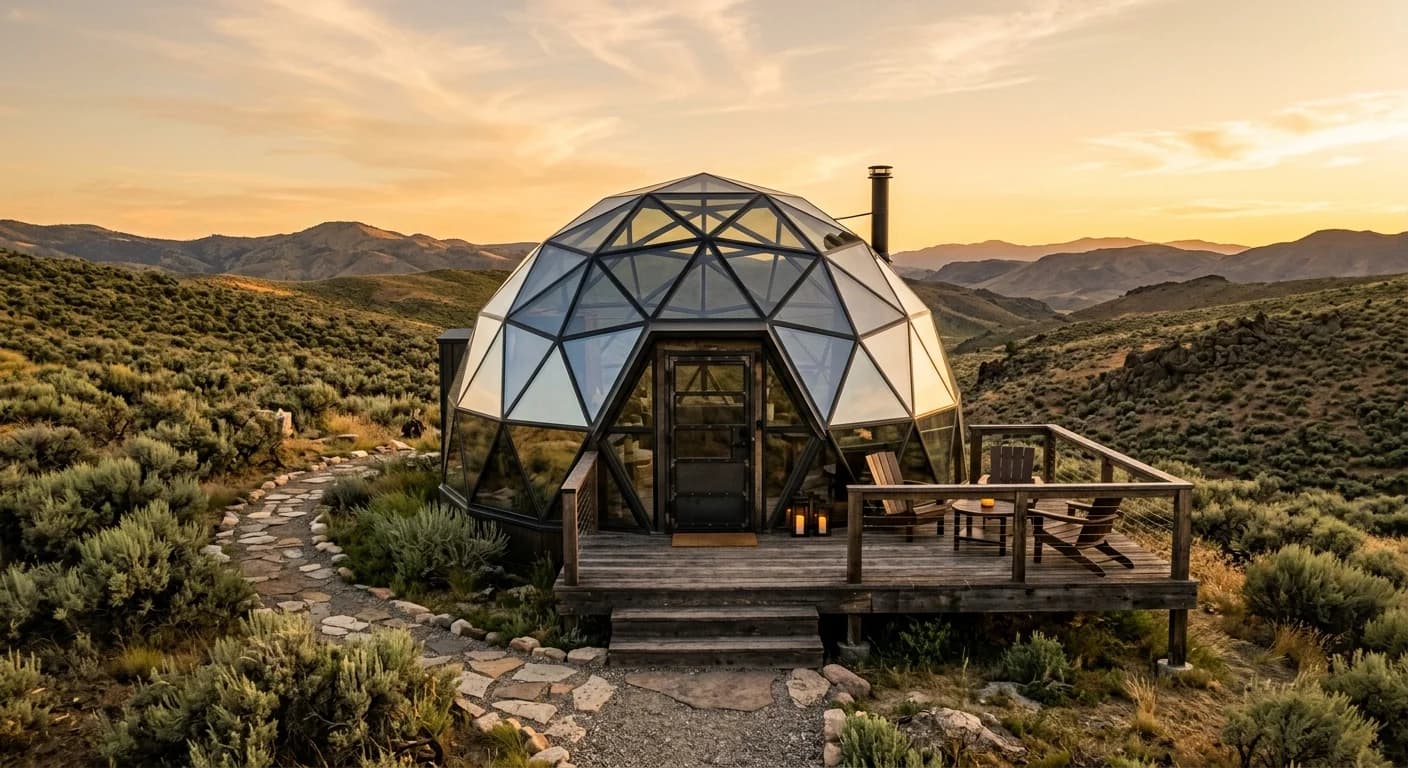
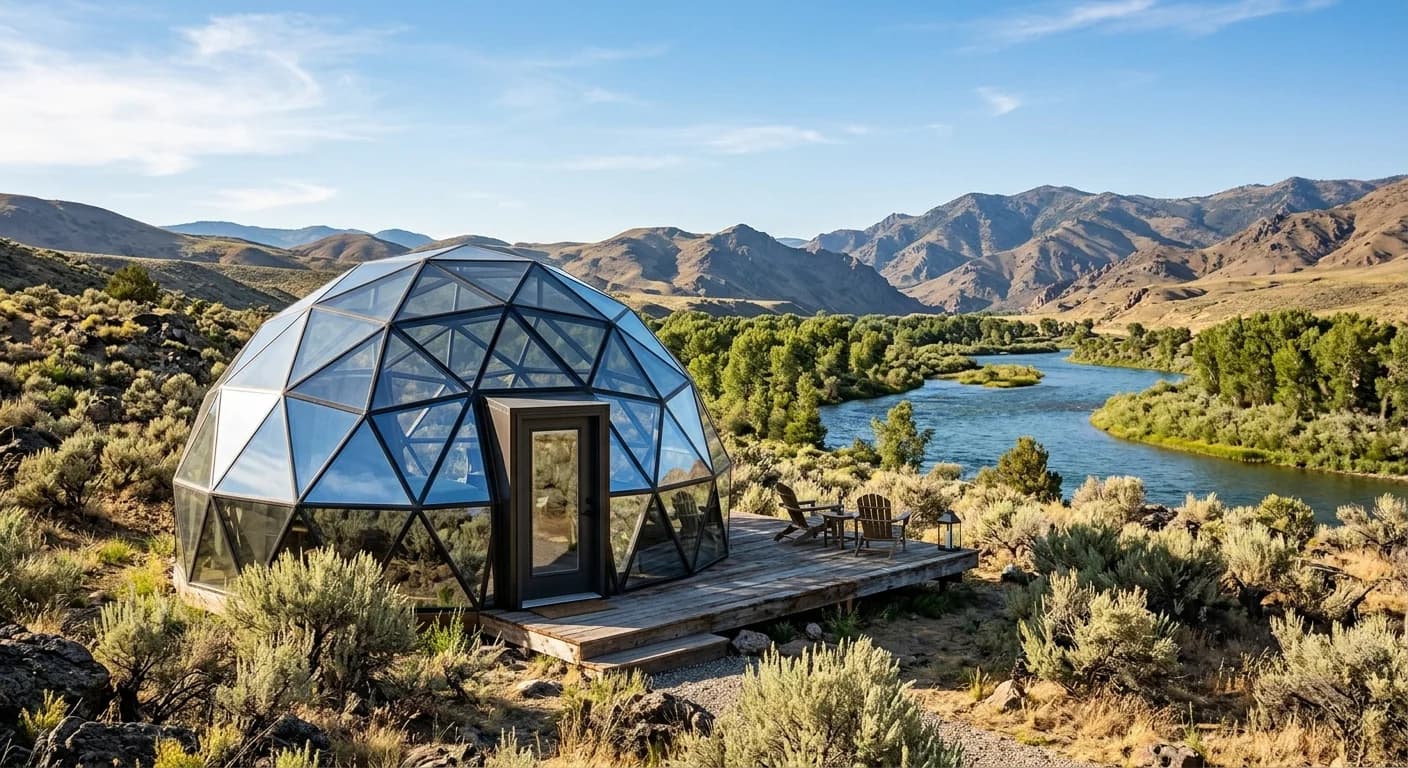
Modern glamping domes typically range from 16 feet (about 200 sq ft) to 30+ feet (700+ sq ft) in diameter. Covers are made from PVC, heavy-duty polyester, or polycarbonate panels. Many feature transparent sections for panoramic views and stargazing -- one of the defining experiences of dome glamping.
The frame is usually galvanized steel or aluminum tubing connected at hubs where multiple struts meet. Higher-end models use insulated panels rated for four-season use, while budget options rely on single-layer fabric covers suited only for mild weather.
What Is a Traditional Glamping Tent?
"Glamping tent" is an umbrella term covering several distinct designs, each with its own history and structural approach:
Safari tents originated in colonial-era Africa and feature a rectangular footprint with a peaked ridge line, vertical walls, and a covered veranda. They are the largest traditional glamping tents, often exceeding 400 square feet with multiple rooms.
Bell tents use a single center pole supporting a conical canvas roof, with the fabric staked in a circle at ground level. Their design has roots in the Plains Indian tipi and British military camp tents. Most bell tents range from 13 to 20 feet in diameter.
Wall tents (also called outfitter tents or prospector tents) have vertical side walls, a ridge pole, and an A-frame roof. They are the standard backcountry canvas tent and remain popular for hunting camps and rustic glamping setups.
Yurts, while technically a separate category, often appear in glamping contexts. They use a lattice wall frame with a compression ring at the crown. Traditional yurts have been used across Central Asia for thousands of years.
All traditional glamping tents share a common feature: they rely on tension (guy lines, stakes) and compression (poles) to maintain their shape. This means they require secure ground anchoring and are more dependent on proper setup than a geodesic dome.
Geodesic Dome Advantages
Traditional Tent Advantages
Head-to-Head Comparison
Wind Resistance
Geodesic domes are the clear winner. The curved surface deflects wind rather than catching it. A well-anchored dome can handle sustained winds above 75 mph -- some manufacturers rate their frames for 100+ mph. Traditional tents present flat surfaces to the wind, creating drag and requiring robust guy lines and stakes. A safari tent in 50 mph gusts is under serious stress. Bell tents fare somewhat better due to their conical shape but still cannot match a dome's aerodynamic profile.
Snow Load
Domes handle snow well because the curved surface encourages snow to slide off, and any accumulation distributes load across the entire frame. Most glamping domes are rated for 30-50 lbs per square foot of snow load. Traditional tents struggle here. Flat roof sections on safari and wall tents collect snow, and the center pole of a bell tent can buckle under heavy accumulation. If you operate in a snowy climate, domes require far less maintenance during winter storms.
Insulation and Climate Control
Domes are easier to heat and cool efficiently. The spherical interior has the lowest surface-area-to-volume ratio of any shape, meaning less heat escapes per cubic foot of living space. Insulated dome panels (double-wall PVC with foam or reflective layers) can maintain comfortable temperatures in sub-zero conditions with a small heater.
Traditional canvas tents breathe well in warm weather -- the natural fiber wicks moisture and allows airflow. But they are difficult to insulate for cold weather. Adding a wood stove helps, though canvas near a hot flue requires careful fire safety measures. In summer, canvas stays cooler than PVC naturally but warmer than a well-ventilated dome with operable windows.
Interior Space and Usability
A geodesic dome maximizes usable floor space because the walls curve outward rather than angling inward. A 20-foot dome provides roughly 314 square feet of floor space, and most of it has standing headroom. The lack of center poles means furniture can go anywhere.
A 20-foot bell tent has a similar floor area but the usable space shrinks dramatically near the edges where the canvas slopes to the ground. Only the center has full headroom. Safari tents solve this with vertical walls, but they require a larger footprint and more material to achieve the same usable area.
Natural Light
Domes with transparent panels or bay windows allow panoramic views and natural light that no traditional tent can match. Some models feature fully transparent covers or large skylight sections for stargazing. Traditional tents rely on small windows, mesh panels, or open flaps for light. Canvas interiors tend to be dimmer, which some guests find cozy and others find limiting.
Setup Time
Traditional tents generally set up faster for smaller sizes. An experienced crew can raise a bell tent in 30 minutes. A safari tent takes a few hours. A geodesic dome, however, requires assembling dozens of struts and hubs -- initial setup for a mid-size dome runs 4 to 8 hours with a small team. The tradeoff: once erected, a dome stays up semi-permanently with minimal maintenance, while canvas tents need periodic re-tensioning, especially after rain and temperature swings.
Durability and Lifespan
Geodesic dome frames (steel or aluminum) last 15-20+ years with basic maintenance. PVC covers typically last 10-15 years before UV degradation requires replacement. The frame itself is essentially permanent.
Canvas glamping tents last 5-10 years with proper care -- waterproofing treatments, mold prevention, and winter storage. The fabric degrades faster than dome covers, and poles and hardware need regular inspection. Safari tents with heavy-duty canvas and steel frames can stretch toward the longer end of that range.
Cost
This is where the comparison gets nuanced. Upfront, traditional glamping tents are significantly cheaper. A quality bell tent costs $500 to $2,000. A safari tent with steel frame runs $3,000 to $10,000. A geodesic dome tent starts around $3,000 for a basic 16-foot model and scales to $15,000-$40,000+ for insulated, four-season structures with transparent panels and integrated flooring.
However, total cost of ownership narrows the gap. Domes require less maintenance, last longer, and cost less to heat. Over a 10-year span, a $12,000 dome that lasts 15 years with minimal upkeep can cost less per year than a $4,000 safari tent that needs replacement canvas, re-waterproofing, and structural repairs.
Who Should Choose a Geodesic Dome
A geodesic dome tent makes sense if:
- You operate in a four-season climate. The structure handles snow, wind, and temperature extremes that would destroy or severely stress a traditional tent.
- You want a semi-permanent installation. Domes stay up year-round, making them ideal for glamping resorts, Airbnb properties, and backyard retreats that operate continuously.
- Interior ambiance matters. Panoramic windows, stargazing panels, and the open floor plan create a distinctive guest experience that photographs well and commands premium nightly rates.
- You prioritize low maintenance. Once installed, domes need little attention beyond occasional cleaning and cover inspection.
Who Should Choose a Traditional Glamping Tent
A traditional glamping tent is the better choice if:
- Budget is the primary constraint. You can furnish a complete bell tent glamping setup for under $3,000 -- a fraction of a comparable dome.
- You need seasonal or portable shelter. If you take down your tent each winter or move between event sites, the lighter weight and simpler breakdown of a bell or safari tent matters.
- You want a classic aesthetic. Canvas tents evoke a timeless, romantic quality that appeals to guests looking for a traditional outdoor experience.
- You operate only in warm months. If your season runs May through September with mild weather, the canvas tent's natural breathability and lower cost make it the practical choice.
Buying vs Renting vs Resort Stay
Buying
Purchasing makes sense if you plan to use the structure more than 20-30 nights per year or operate a rental property. For geodesic domes, budget for the structure plus a platform ($2,000-$8,000), furnishing ($2,000-$5,000), and utilities (electrical, plumbing if applicable). Total all-in cost for a turnkey glamping dome unit runs $15,000 to $60,000.
For traditional tents, the all-in cost is lower: $2,000 to $15,000 including platform, furnishing, and weatherproofing.
Renting
Event rental companies offer both structures. Dome rentals run $500 to $2,000 per weekend depending on size and amenities. Bell tent rentals cost $200 to $800 per weekend. Renting makes sense for weddings, festivals, one-time events, or testing the concept before committing to purchase.
Resort Stay
Booking a night at a glamping resort lets you experience dome or tent camping without any ownership commitment. Glamping dome resorts typically charge $150 to $500+ per night depending on location, season, and amenities. Traditional tent glamping sites run $75 to $300 per night. A resort stay is the best way to understand what you actually want before investing in your own setup.
Cost Breakdown
| Category | Geodesic Dome Tent | Traditional Glamping Tent | |---|---|---| | Entry-level structure | $3,000 - $6,000 | $500 - $2,000 | | Mid-range (furnished-ready) | $8,000 - $15,000 | $3,000 - $8,000 | | Premium four-season | $15,000 - $40,000+ | $8,000 - $15,000 | | Platform/foundation | $2,000 - $8,000 | $1,000 - $4,000 | | Annual maintenance | $200 - $500 | $500 - $1,500 | | Expected lifespan | 15 - 20 years | 5 - 10 years | | Nightly rental rate (resort) | $150 - $500+ | $75 - $300 |
These ranges reflect the U.S. market as of 2026. Prices vary by manufacturer, region, and specification level.
The Bottom Line
A geodesic dome tent is the superior structure for year-round durability, weather resistance, and interior experience. It costs more upfront but lasts longer, maintains easier, and creates a more distinctive space. A traditional glamping tent costs less, sets up faster, and carries a classic aesthetic that many guests love -- but it demands more maintenance and cannot match a dome's performance in harsh conditions.
Neither is universally "better." The right choice depends on your climate, budget, timeline, and what experience you want to create. If you are still deciding, the most useful next step is to stay in both and compare the experience firsthand.
Keep Reading
- Geodesic Dome Glamping Prices Guide -- What dome stays actually cost, what is included, and how to find deals.
- Stargazing from a Geodesic Dome -- Why transparent panels make dome stays unforgettable.
- Glamping vs Camping: What to Expect -- An honest comparison for first-timers.
- Complete Guide to Geodesic Dome Glamping -- Everything you need to know about dome stays.