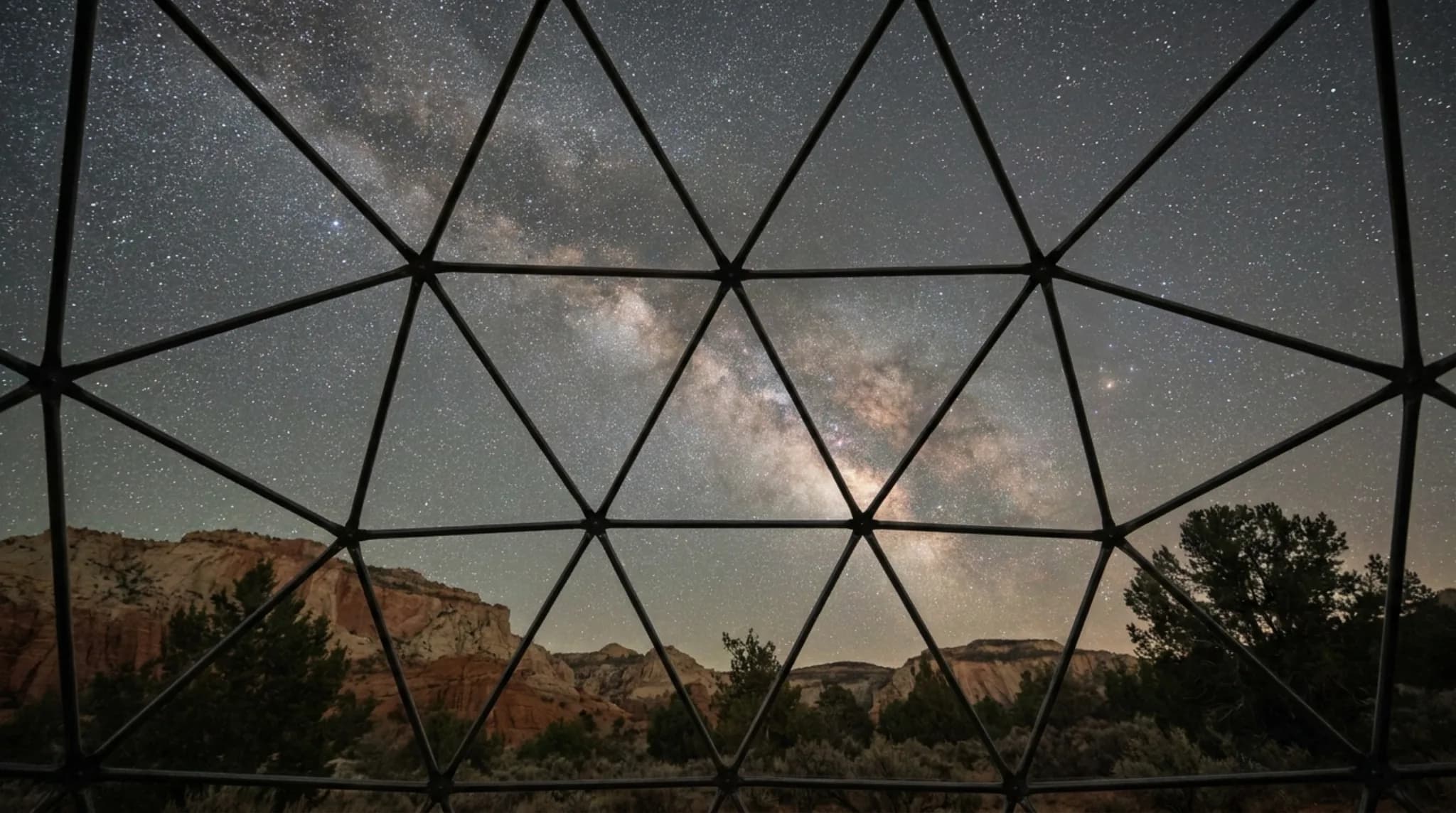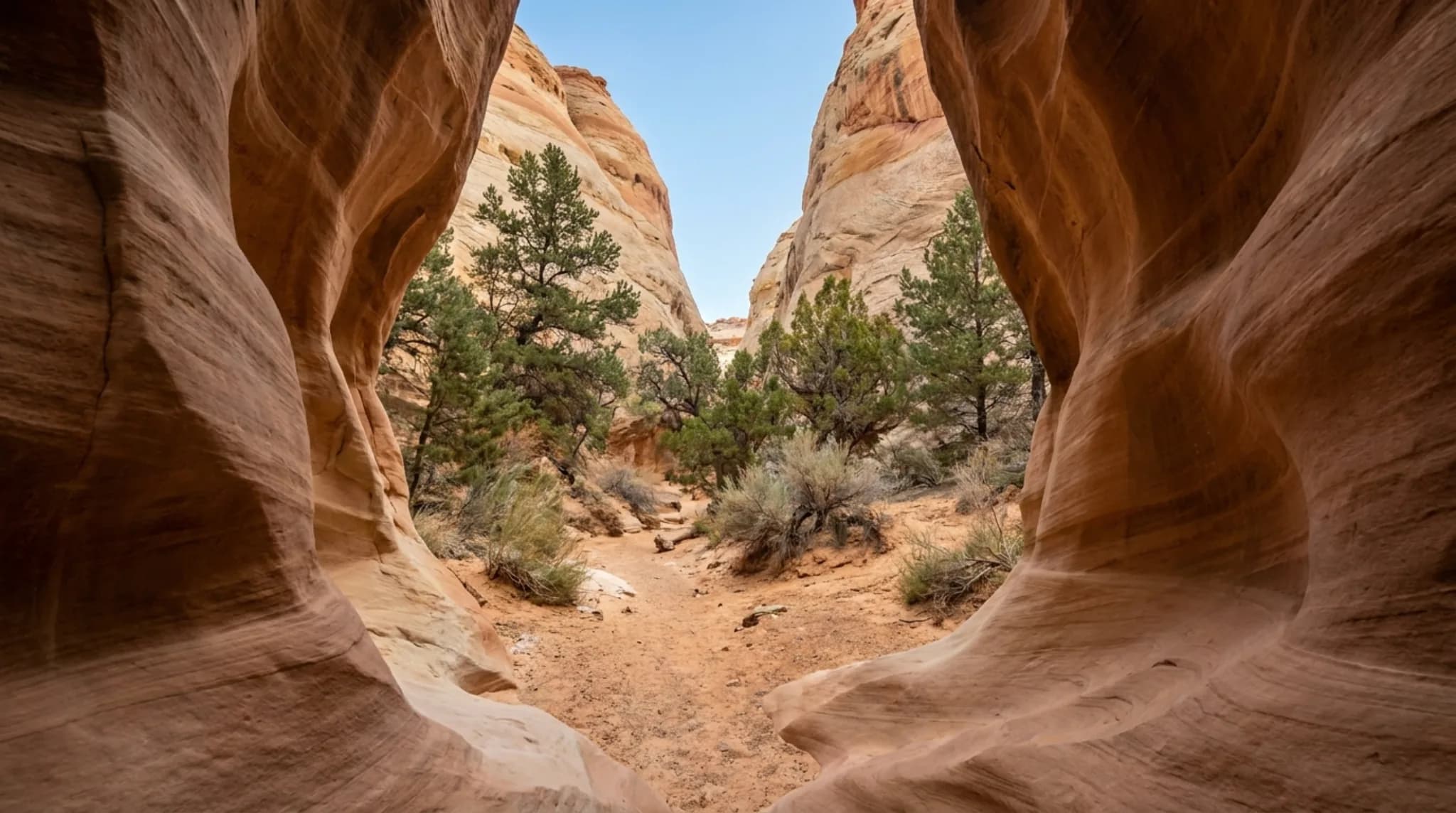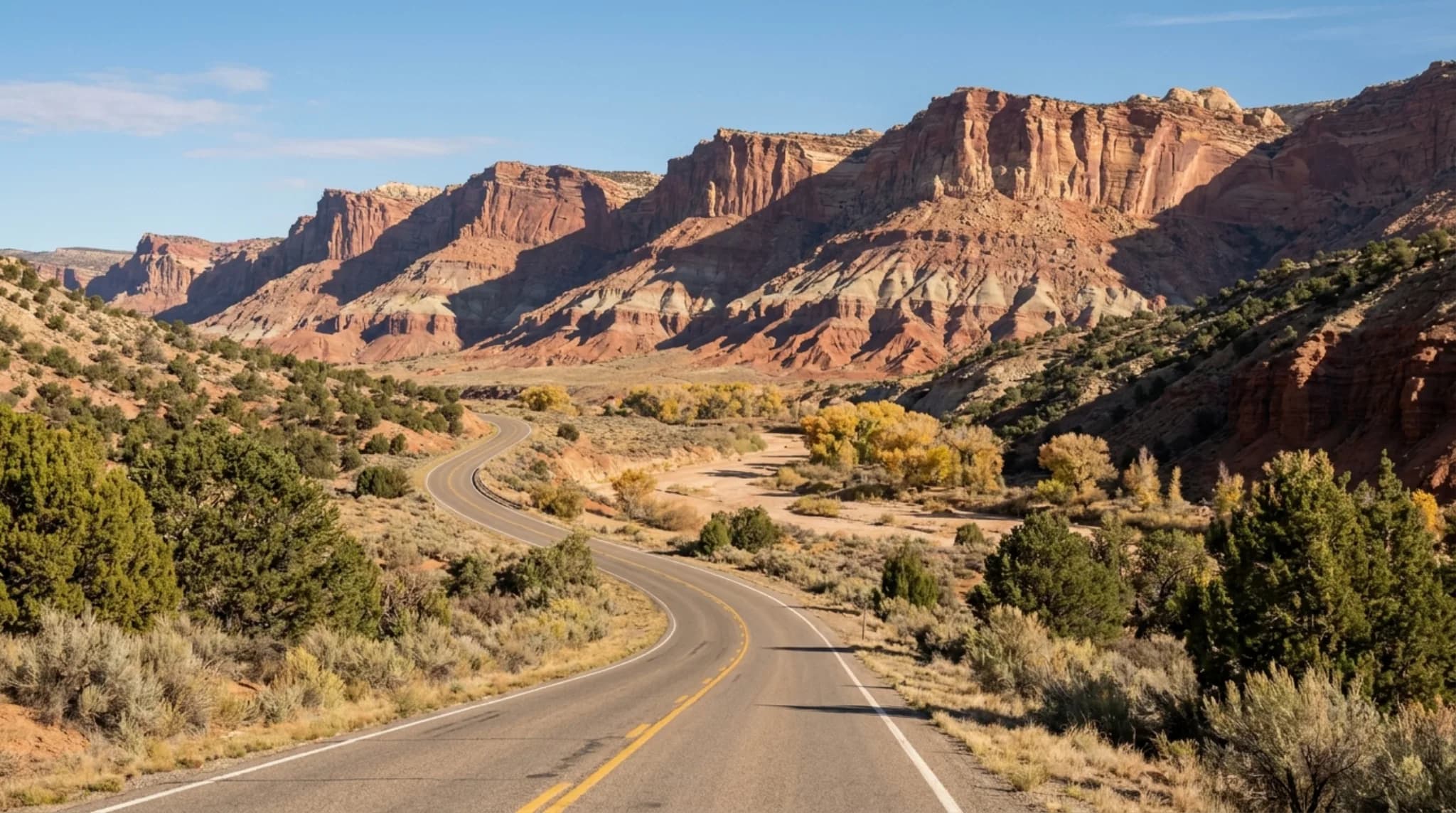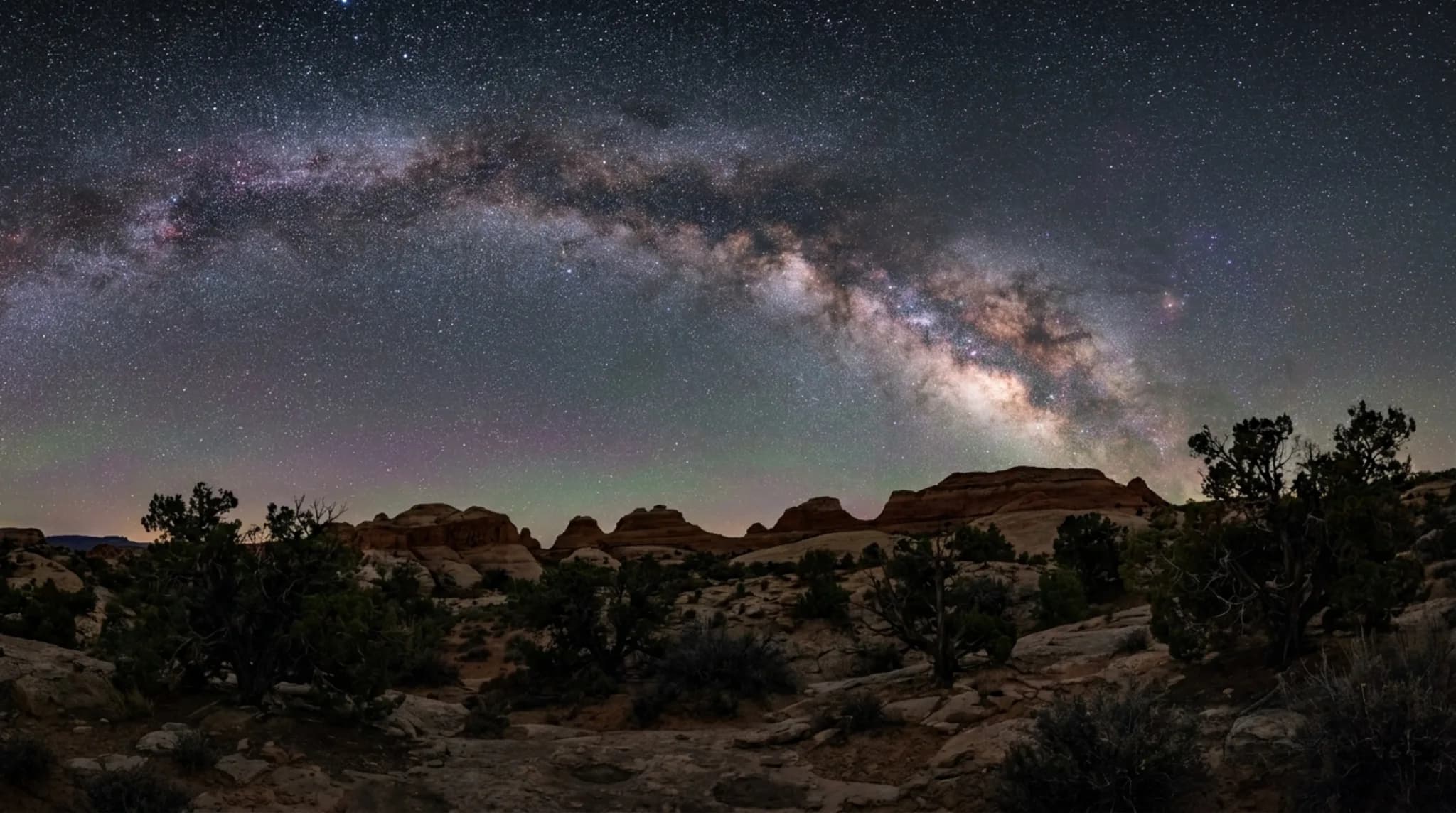
Utah has 28 certified International Dark Sky Places — 22 parks, monuments and protected areas plus 6 certified communities — the highest concentration of any place in the world. All five of its national parks are certified. The single most under-reported fact in that list: when Torrey was certified in January 2018, it became not just Utah's first Dark Sky Community but the first national park gateway community in the United States to earn the designation, sitting directly alongside Capitol Reef National Park's Gold-tier certification from 2015.
We compiled this list in August 2026 because no single accurate version of it exists. The state's own sources disagree with each other, and both carry errors — one lists a park that was decertified three years ago, and the other reports a lesser designation category as though it were a full park. Details and corrections below.
The Full List
- Dark Sky Park
- 19 places
- Dark Sky Community
- 6 places← incl. Torrey
- Urban Night Sky Place
- 2 places
- Dark Sky Sanctuary
- 1 places
28 total, compiled August 2026. The Park count includes national parks, national monuments, state parks and one county park. Urban Night Sky Place is a distinct and lesser category — Snow Canyon and Timpanogos Cave hold it, and both are routinely miscounted as full Dark Sky Parks.
National parks and monuments
| Place | Designation | Year |
|---|---|---|
| Capitol Reef National Park | Dark Sky Park (Gold tier) | 2015 |
| Arches National Park | Dark Sky Park | — |
| Bryce Canyon National Park | Dark Sky Park | — |
| Canyonlands National Park | Dark Sky Park | — |
| Zion National Park | Dark Sky Park | — |
| Cedar Breaks National Monument | Dark Sky Park | — |
| Dinosaur National Monument | Dark Sky Park | — |
| Hovenweep National Monument | Dark Sky Park | — |
| Natural Bridges National Monument | Dark Sky Park | — |
| Rainbow Bridge National Monument | Dark Sky Sanctuary | — |
| Timpanogos Cave National Monument | Urban Night Sky Place | — |
State and county parks
| Place | Designation | Year |
|---|---|---|
| Dead Horse Point State Park | Dark Sky Park | 2016 |
| Goblin Valley State Park | Dark Sky Park (Gold tier) | 2016 |
| Antelope Island State Park | Dark Sky Park | 2017 |
| Steinaker State Park | Dark Sky Park | 2018 |
| East Canyon State Park | Dark Sky Park | 2020 |
| Fremont Indian State Park | Dark Sky Park | 2021 |
| Goosenecks State Park | Dark Sky Park | 2021 |
| Jordanelle State Park | Dark Sky Park | 2021 |
| Rockport State Park | Dark Sky Park | 2021 |
| Snow Canyon State Park | Urban Night Sky Place | 2025 |
| North Fork Park (Weber County) | Dark Sky Park | — |
Certified communities
| Community | Designation | Year |
|---|---|---|
| Torrey | Dark Sky Community — Utah's first | 2018 |
| Helper | Dark Sky Community | — |
| Springdale | Dark Sky Community | — |
| Castle Valley | Dark Sky Community | 2024 |
| Moab | Dark Sky Community | 2024 |
| Bluff | Dark Sky Community | 2025 |
Years are shown where a primary source confirmed them. A dash means the place is certified but we could not verify the year to the standard of the rest of this table — not that the year is unknown to anyone, only that we did not confirm it.
The Gateway Community Finding
This is the part that gets lost in every roundup.
In January 2018 Torrey became Utah's first International Dark Sky Community, and the eighteenth in the world. More significantly, it was the first national park gateway community in the United States to earn the designation.
“
A certified Gold-tier Dark Sky Park, and the first certified gateway community in the country, sharing a boundary. The protection does not stop where the park does.
”
That matters practically rather than ceremonially. A dark sky park surrounded by an uncontrolled town gives you a protected sky you have to drive into and a degraded sky where you sleep. Capitol Reef was certified Gold tier in 2015; Torrey adopted and enforced the lighting ordinance that certified it three years later. The result is continuous protection across the boundary — which is the condition that actually determines what you can see from a bed rather than from a trailhead at 2am.
Of Utah's six certified communities, Springdale (Zion) and Moab (Arches and Canyonlands) are also gateway towns. Torrey was first.
Where the Official Lists Are Wrong
Compiling this surfaced two errors in sources people reasonably treat as authoritative.
The count reconciles cleanly once you account for the first error: 22 parks and protected areas plus 6 communities is 28, and that figure already excludes Kodachrome Basin. Including it, as the state parks page implies, would give 29.
What the Four Designations Mean
The categories are not interchangeable, and the difference is routinely flattened in travel writing.
Dark Sky Park
Protected public land certified for the quality of its night sky and for how it manages its own lighting. The most common designation in Utah.
Dark Sky Community
An incorporated town or city that has adopted and enforces a lighting ordinance. This is the one that requires ongoing political will, not just land management.
Dark Sky Sanctuary
A remote site with exceptionally dark skies and a fragile protection status. Rainbow Bridge National Monument is Utah's.
Urban Night Sky Place
A site near significant light pollution that still maintains an exceptional nighttime experience. Snow Canyon and Timpanogos Cave hold this designation — not full park status.
What Gold-Tier Meant
Some Utah parks carry a Gold tier distinction. Tier ratings described the measured quality of the night sky at the park at the time of certification, with Gold the darkest category.
Two Utah places are documented at Gold tier in the sources we checked: Capitol Reef National Park (2015) and Goblin Valley State Park (2016).
Tier language appears less in recent designations than it did a decade ago, so treat it as a historical marker of how dark a place measured when it was certified rather than a current, continuously verified rating.
How This Was Compiled
Assembled in August 2026 by cross-checking three sources against each other:
- Visit Utah's dark sky places listing — the state tourism office
- Utah State Parks' Dark Sky Initiative page — for state park designations and years
- DarkSky International designation announcements — for individual certifications, tiers and decertifications
Where sources conflicted, we went to the announcement for the individual place. Where we could not confirm a designation year to that standard, the table shows a dash rather than a guess.
DarkSky International's own place directory blocks automated access, so this compilation is drawn from published announcements and the two state-level lists rather than scraped from the registry. Anyone needing a certified-as-of-today answer should go to DarkSky International directly.
What Has Actually Been Measured at Capitol Reef
Certification is a record. Measurement is a different thing, and for Capitol Reef some of it exists.
The NPS Natural Sounds and Night Skies Division, working with Capitol Reef National Park staff, collected night sky data at 14 locations throughout the park for a Natural Resource Condition Assessment published in 2022. The assessment used four night sky indicators across seven measures, including luminance, a measure of anthropogenic light pollution, and sky quality assessed by both the Bortle Dark-Sky Scale and limiting magnitude — the faintest star visible to the naked eye.
NPS night sky condition ratings, Capitol Reef (2022 assessment)
- LuminanceGood
- Anthropogenic light pollutionGood
- Sky qualityGood
- IlluminanceGood / Fair
- Monitoring locations14 across the park
Three of the four night sky indicators were rated good; the fourth, illuminance, was rated good/fair. The Park Service's summary is that "the indicators of night sky condition are good."
Broader measured sources do exist and are worth knowing about: the NPS Night Skies Program has collected thousands of night sky image datasets nationally since the early 2000s; Globe at Night's monitoring network publishes sky quality meter readings as downloadable data; and the World Atlas of Artificial Night Sky Brightness (Falchi et al., Science Advances, 2016) models zenith brightness worldwide, calibrated against more than 35,000 SQM observations.
What This List Still Lacks
What none of those sources give you is a reading from where you will actually sleep.
Park-wide ratings describe a 243,921-acre park. Satellite-derived models describe a grid square. Neither tells you how dark it is at a specific lodging site, how that shifts between a new moon in December and a full moon in June, or how one property compares with another a few miles down the road.
We intend to publish that. The plan is measured readings from our own site near Torrey in magnitudes per square arcsecond, taken across seasons and moon phases with the method stated plainly enough that anyone can check the numbers or repeat them. When that data exists it will appear here, alongside this list rather than replacing it.
Until then, treat this page as what it is: the most accurate certification list we could assemble, with its errors corrected, its gaps marked, and the measured park-level data that does exist reported honestly as ratings rather than dressed up as precision.
Frequently Asked Questions
How many certified Dark Sky Places does Utah have?
Twenty-eight, as compiled in August 2026 — twenty-two parks, monuments and protected areas plus six certified communities. Utah has the highest concentration of certified International Dark Sky Places in the world.
Which Utah town was the first certified Dark Sky Community?
Torrey, in January 2018. It was Utah's first, the eighteenth in the world, and the first national park gateway community in the United States to earn the designation. Torrey sits adjacent to Capitol Reef National Park, which had been certified a Gold-tier International Dark Sky Park in 2015.
What does Gold-tier mean for a Dark Sky Park?
Tier ratings described the quality of the night sky measured at a park at the time of certification, with Gold indicating the darkest category. Capitol Reef National Park and Goblin Valley State Park were both recognised at Gold tier, in 2015 and 2016 respectively.
What is the difference between a Dark Sky Park and a Dark Sky Community?
A Park is a protected public land certified for the quality of its night sky and its lighting management. A Community is an incorporated town or city that has adopted and enforces a lighting ordinance. A Sanctuary is a remote site with exceptionally dark skies and fragile protection status, and an Urban Night Sky Place is a site near significant light pollution that still maintains an exceptional nighttime experience.
Is Kodachrome Basin still a Dark Sky Park?
No. Kodachrome Basin State Park was certified in January 2021 and decertified in August 2023 at the request of park staff. It still appears on the Utah State Parks dark sky page, which is out of date — Visit Utah's list correctly omits it.
Which Utah national parks are certified Dark Sky Parks?
All five — Arches, Bryce Canyon, Canyonlands, Capitol Reef and Zion — along with the national monuments at Cedar Breaks, Dinosaur, Hovenweep, Natural Bridges, Rainbow Bridge and Timpanogos Cave.
Has the night sky at Capitol Reef actually been measured?
Yes. The NPS Natural Sounds and Night Skies Division and Capitol Reef park staff collected night sky data at 14 locations across the park for a Natural Resource Condition Assessment published in 2022. Three of the four night sky indicators — luminance, anthropogenic light pollution and sky quality — were rated good, and illuminance was rated good/fair. The assessment reports condition ratings rather than raw magnitudes per square arcsecond.
Reuse this table
This list is published as an open dataset under a Creative Commons Attribution 4.0 licence. You may republish it, in whole or in part, including commercially, provided you credit the source and link back.
Suggested credit:
Certified dark sky places in Utah, compiled August 2026 — Capitol Reef Country, Torrey, Utah. https://luxedenresorts.com/guides/utah-dark-sky-parks
If you find an error or a designation we have missed, tell us and we will correct it and note the correction. A list that gets fixed in public is worth more than one that is quietly right.
Compiled August 2026 from Visit Utah, Utah State Parks and DarkSky International designation announcements. Certifications change — new places are designated and, as Kodachrome Basin shows, existing ones can be withdrawn. Verify current status with DarkSky International.
We run rooms and tempered-glass geodesic domes near Capitol Reef in Torrey, Utah — inside the certified community, next to the Gold-tier park. See where to stay, or join the list for dark sky nights and the sky-brightness readings when we publish them.
More guides
- Stargazing from a Geodesic Dome -- What changes when you watch from inside.
- Things to Do in Capitol Reef -- Every trail, drive and site.
- Capitol Reef Visitor Center -- Hours, fees, and what to do first.