The Capitol Reef Visitor Center sits in the middle of the park, directly off Utah State Route 24. It is the place to get current road conditions, pick up a free backcountry permit, watch the park film, and see the exhibits on the Waterpocket Fold before you drive anything. The National Park Service does not publish fixed hours — it says the center is open daily except some major holidays and that hours vary seasonally, so call 435-425-3791 for current times before you set out.
Most people arrive at Capitol Reef with a vague plan and lose an hour figuring out where to start. The visitor center solves that, and it is genuinely worth the stop rather than a formality to skip. It is also the only place in the park where a ranger can tell you whether the dirt spur roads are passable today — which, in a park where flash floods and mud close roads without notice, is the difference between a good day and a wasted one.
Where the Visitor Center Is
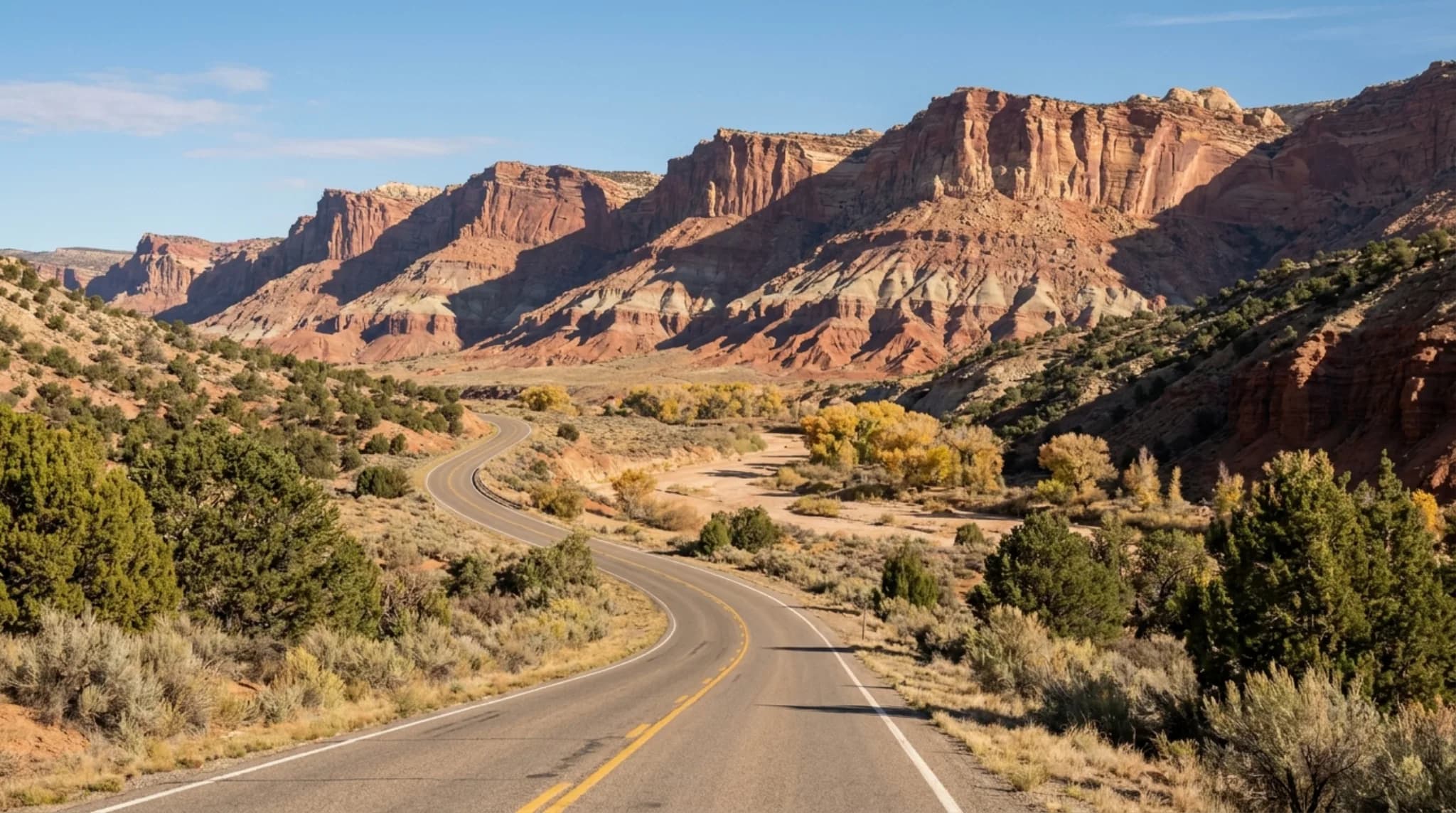
The visitor center is located in the center of the park, off Utah State Route 24. SR-24 is the road that runs east to west through Capitol Reef, connecting Torrey on the west side with Hanksville to the east. State Route 12 comes up from the Panguitch and Bryce Canyon side and joins SR-24 near Torrey.
The park's mailing address is HC 70, Box 15, Torrey, UT 84775.
If you are coming off the interstates, the Park Service publishes these approach distances along SR-24:
Approach distances on SR-24
- Westbound from I-7081.1 miles
- Eastbound from I-7063.4 miles
- Northbound from I-1547.1 miles
- Southbound from I-1574.1 miles
Bryce Canyon is roughly three hours away via SR-12, which makes Capitol Reef a realistic second stop on a southern Utah loop rather than a detour.
Visitor Center Hours
This is the question people most want a number for, and it is the one the Park Service deliberately does not answer in print.
The official line is that the visitor center is open daily except for some major holidays, and that hours vary seasonally. Rather than publish a table that goes stale, the Park Service directs visitors to call.
The park itself is open year-round. Roads inside it are a different matter — some can close due to snow or other inclement weather, and the campgrounds stay accessible through the year.
Any site quoting you exact visitor center hours is guessing, or repeating a number that was true in some past season. Treat the phone line as the source.
Entrance Fees and Passes
An entrance fee is charged for Capitol Reef National Park. In the Park Service's own words, "the fee depends on how a visitor arrives at the park, and whether they are part of a commercial or guided tour."
Children under 16 enter free. Beyond the park-specific passes, the interagency options apply:
- America the Beautiful annual — $80 for residents, $250 non-resident
- Senior annual (62+) — $20; senior lifetime — $80
- Military annual — free; military lifetime for veterans and Gold Star families — free
- Access Pass for permanent disability — free
- 4th Grade Pass — free
Commercial and guided groups pay separately: $10 per person for guided activities, and $100 for commercial vehicles with 16 or more seats. Those fees are paid at the visitor center or through pay.gov.
There are eight fee-free days in 2026, including Presidents Day, Independence Day and Veterans Day.
Camping at Fruita Campground is $25 per night, or $12.50 for senior and Access Pass holders.
If your route or plans are unusual, confirm what applies to you on the phone rather than assuming. The Park Service ties the fee to how you arrive, and that is not something a third-party page can answer for your specific trip.
What's Inside
The visitor center is a working orientation stop, not a museum you need to budget an afternoon for.
Exhibits
Interpretive displays covering the park's human history, its plant and animal life, and the geology of the Waterpocket Fold — the hundred-mile wrinkle in the earth's crust that the entire park exists to protect.
Park film
An orientation film that gives you the shape of the place before you drive into it.
Bookstore
Maps, field guides and regional titles. Worth it for a paper map alone, given the GPS warning.
Permits and rangers
Free backcountry, canyoneering and climbing permits, plus current road and weather conditions from someone who checked this morning.
For accessibility, audio descriptions of all exhibits are available through the NPS Audio Description Tours mobile app, with an iPhone version in the App Store.
The building itself has some history. The current visitor center was built in 1964–65 in the Mission 66 architectural style, designed by Cecil Doty, and replaced a Civilian Conservation Corps ranger station dating from 1940.
Directions and Getting There
The practical version: get yourself onto SR-24, and the visitor center is signed off it in the middle of the park. Coming west from I-70 it will be on your left; from every other approach — eastbound from I-70, northbound or southbound from I-15 — it will be on your right.
What to Do First
If you have a full day and you are starting from the visitor center, the order that wastes the least time is:
- Ask about road conditions. Grand Wash and Capitol Gorge are dirt. Whether they are open today is the single fact that shapes the rest of your plan.
- Watch the film and walk the exhibits. Twenty minutes here makes everything you look at afterward legible — particularly the Waterpocket Fold, which is hard to read as a feature until someone explains what you are seeing.
- Pick up a paper map from the bookstore.
- Sort permits if you are heading into the backcountry. They are free.
- Drive the Scenic Drive, with the spurs if they are open.
That sequence front-loads the information and leaves the driving for when you know what the roads are doing.
The Scenic Drive
The Scenic Drive is the park's signature road and the most efficient way to see the Waterpocket Fold up close without hiking.
The main 7.9-mile road (12.7 km) is paved and suitable for passenger vehicles. Two dirt spur roads branch off it — Grand Wash and Capitol Gorge — and both are usually suitable for passenger cars and RVs up to 27 feet (8.2 metres).
The word doing the work there is usually. All three roads can close due to snow, ice, mud and flash floods. In a slot-canyon landscape, a storm many miles away can close a wash with no rain falling where you are standing. Call 435-425-3791 for real-time road closure information, or ask at the desk.
Budget about an hour and a half round trip if you are driving the spurs as well.
Gifford House and the Fruita Orchards
Near the visitor center, in the historic Fruita district, the Gifford House Store and Museum operates March 14 through late November, daily from 9:00 am to 4:30 pm.
It is one of the few places inside the park where you can buy something made rather than packaged, and the seasonal window is worth knowing about: if you are visiting between December and mid-March, it will be shut. That is a real consideration for winter trips, when in-park services thin out considerably.
After Dark
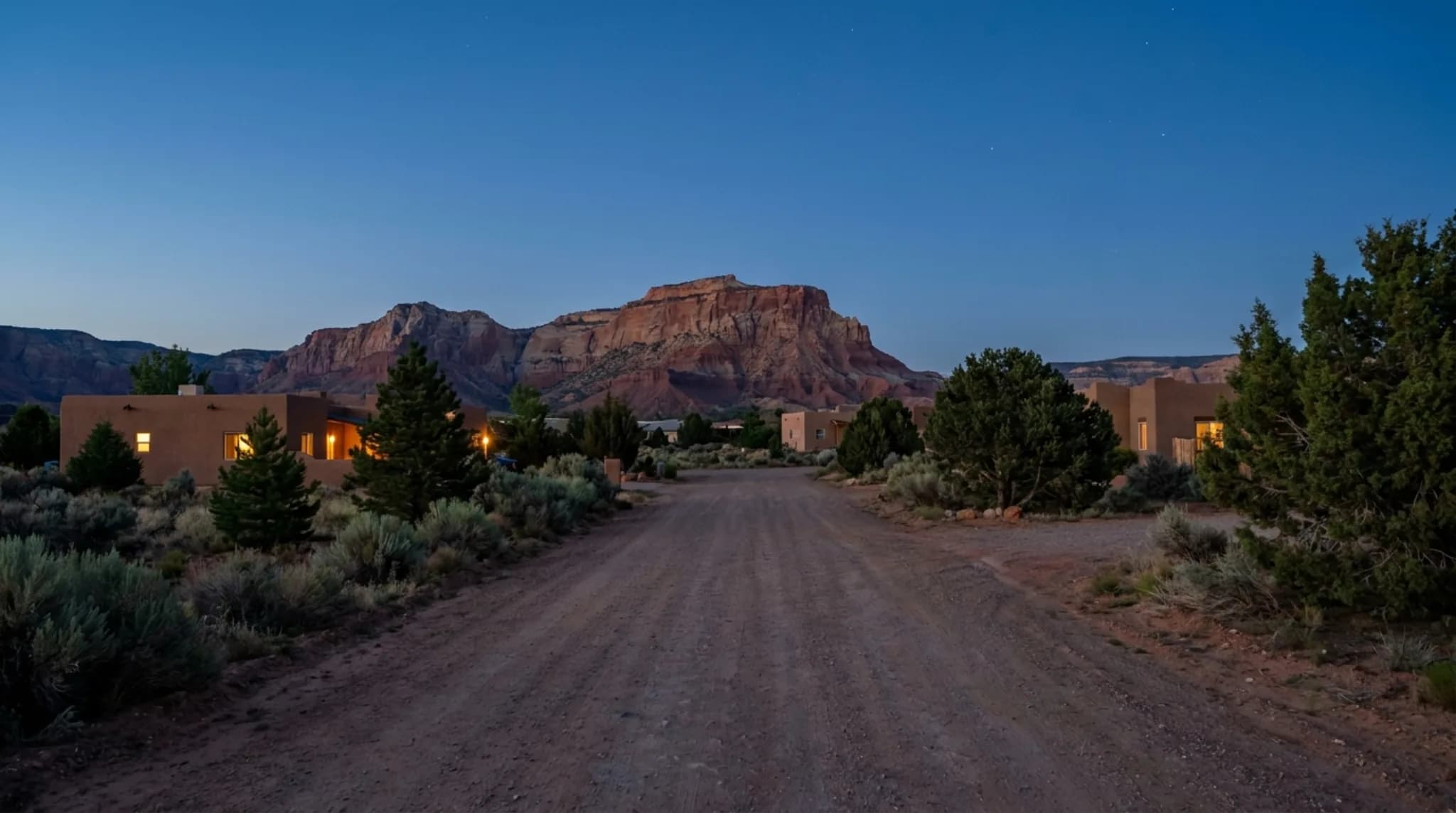
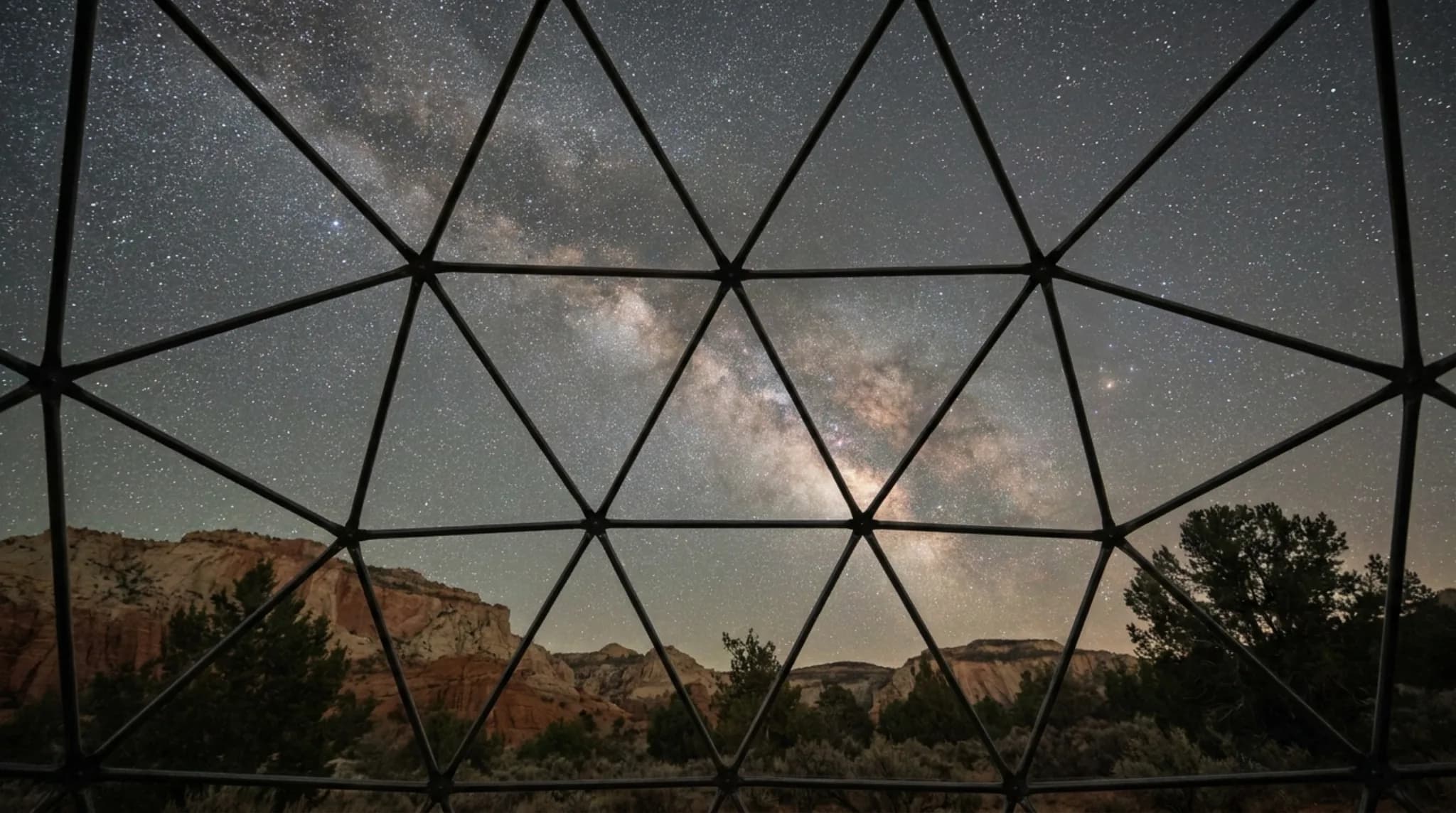
Capitol Reef is a certified International Dark Sky Park, and Torrey — the gateway town on the western approach — is a certified International Dark Sky Community. That pairing is unusual. It means the protection extends past the park boundary into the place where most visitors actually sleep, so the sky does not degrade the moment you drive out for the night.
“
The visitor center is a daytime stop. The reason to stay in the area rather than pass through is what happens over the same rock after the sun goes down.
”
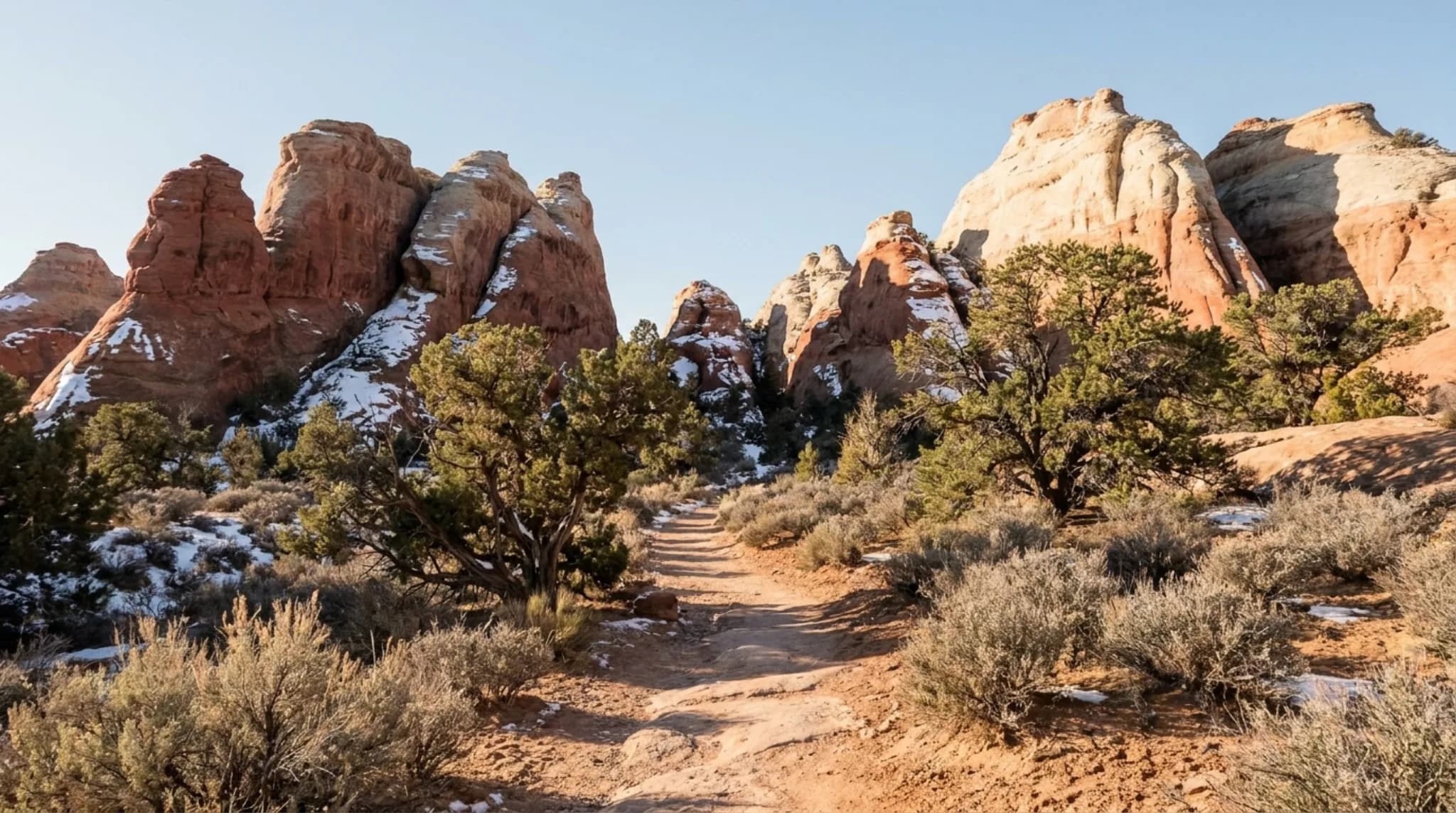
Winter has the longest nights and the clearest, driest air of the year — the best sky conditions Capitol Reef gets. It is also when in-park services are most limited, which is a trade worth planning around rather than discovering on arrival. If you are building a trip around the night sky, our guide to stargazing from a dome covers what changes when you watch from indoors, and what to pack has the cold-weather layer list.
Frequently Asked Questions
Where is the Capitol Reef Visitor Center?
The visitor center sits in the center of the park, directly off Utah State Route 24. The park's mailing address is HC 70, Box 15, Torrey, UT 84775. The National Park Service advises against navigating in by GPS — its guidance is to use a map instead.
What are the Capitol Reef Visitor Center hours?
The National Park Service does not publish fixed hours. It states the visitor center is open daily except for some major holidays, and that hours vary seasonally. Call 435-425-3791 and follow the prompts for current hours before you drive out.
How much does it cost to enter Capitol Reef National Park?
A private vehicle pass is $20 and is valid for seven days. A motorcycle is $15, and entry on foot or by bicycle is $10 per person aged 16 and over. Children under 16 are free. A Capitol Reef annual pass is $35, and an America the Beautiful annual pass is $80.
Do you need to pay a fee to visit the visitor center itself?
The National Park Service states only that an entrance fee is charged for the park and that the fee depends on how a visitor arrives and whether they are part of a commercial or guided tour. Passes are sold at the visitor center and through pay.gov. Call 435-425-3791 to confirm what applies to your route before you go.
Is the Capitol Reef Scenic Drive worth it?
The Scenic Drive is a 7.9-mile paved road that takes about an hour and a half round trip when you include the Grand Wash and Capitol Gorge dirt spurs. It is the most efficient way to see the Waterpocket Fold up close from a passenger vehicle.
Are backcountry permits free at Capitol Reef?
Yes. Backcountry permits are free, and so are canyoneering and rock climbing permits. You can arrange them at the visitor center.
Fees, hours and road conditions come from the National Park Service and can change. Confirm current details at 435-425-3791 or nps.gov/care before you travel.
Planning a trip around Capitol Reef? We run rooms and tempered-glass geodesic domes near the park in Torrey, Utah, under a certified International Dark Sky Park. See where to stay, or join the list for dark sky nights and trip-planning notes.
More guides
- Where to Stay near Capitol Reef -- Rooms and tempered-glass domes in Torrey, Utah.
- Stargazing from a Geodesic Dome -- What changes when you watch the sky from inside.
- What to Pack -- Layers, boots and the things people forget.