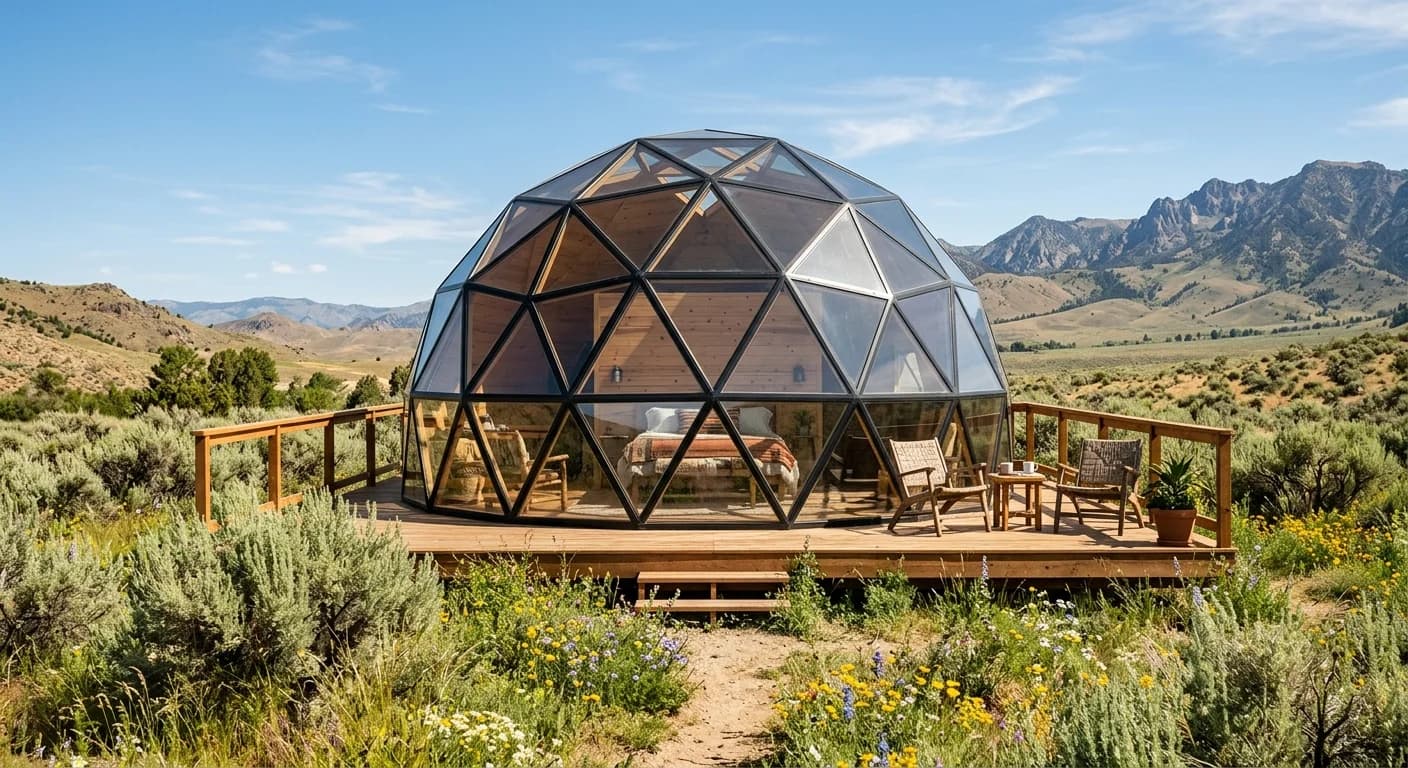
Most hotels treat dogs as a liability. Pet fees stack up, rooms feel cramped, and the "pet-friendly" label often means little more than tolerance. Glamping flips the equation. Your dog gets space to roam, trails to explore, and fresh air instead of recycled HVAC. You get a real vacation without the guilt of leaving them behind.
This guide covers everything you need to plan a pet-friendly glamping trip — what to look for in a property, what to pack, how to handle trails, and how to keep your dog comfortable in a dome or tent setting.
Why Glamping Beats Hotels for Pet Owners
Hotels were designed for humans. The rooms are enclosed, the hallways are narrow, and every surface is someone else's territory your dog can smell but not understand. Even "pet-friendly" hotels impose restrictions that make the experience stressful for both you and your animal.
Glamping properties are built around the outdoors. The differences matter:
Space. Most glamping sites include a private outdoor area — a deck, a clearing, a stretch of meadow. Your dog can stretch out, sniff around, and settle in without being confined to a 300-square-foot box.
Fewer shared walls. Hotel noise complaints are a constant worry with dogs. Glamping structures are spaced apart. If your dog barks at a squirrel at 6 AM, the nearest guest is usually far enough away that it does not register.
Direct outdoor access. No elevator rides, no lobby gauntlets, no navigating crowds with a leash. Step outside and you are there. Late-night bathroom breaks become a 30-second trip instead of a 10-minute ordeal.
Natural stimulation. Dogs are happier when they can engage their senses. The scents, sounds, and sights of a natural setting provide mental enrichment that a hotel room simply cannot match. A tired, stimulated dog is a well-behaved dog.
Lower stress for both of you. When you are not worrying about noise, damage deposits, and whether the front desk is judging your Great Dane, you can actually relax. That is the entire point of a vacation.
Fenced Outdoor Space
Direct Outdoor Access
Nearby Dog-Friendly Trails
Flat Pet Fee (Not Per-Night)
No Breed/Size Restrictions
Emergency Vet Nearby
What to Look for in Pet-Friendly Glamping
Not all pet-friendly properties are created equal. Some genuinely welcome animals; others just tolerate them for the booking. Here is what separates the two.
Pet Policy Details
Read the fine print before you book:
- Number of pets allowed. Some properties cap at one; others allow two or more.
- Size and breed restrictions. A surprising number of "pet-friendly" sites exclude dogs over 50 pounds or specific breeds.
- Fee structure. Look for flat cleaning fees rather than per-night surcharges. Per-night fees add up fast on longer stays.
- Where pets are allowed. Can they be inside the structure? On the bed? Left unattended briefly? Clarity prevents problems.
Outdoor Space
The quality of the outdoor area matters as much as the indoor accommodations:
- Fenced or enclosed areas. Ideal for off-leash time and peace of mind.
- Tie-out options. If not fenced, are there posts or anchors for a lead?
- Shade and water access. Essential in warmer months.
- Distance from roads. Properties set back from traffic are safer for dogs.
Nearby Trails and Activities
A pet-friendly property near dog-friendly trails is worth more than one with perfect amenities but nowhere to walk:
- Check whether nearby trails allow dogs and whether leashes are required.
- Look for water access — rivers, creeks, or lakes where dogs can cool off.
- Confirm that nearby towns have pet supply stores in case you forget something.
Emergency Preparedness
Before you leave home, identify:
- The nearest emergency veterinary clinic to your glamping destination.
- Whether the property has cell service for emergencies.
- Any local wildlife hazards (rattlesnakes, porcupines, bears) that affect dogs.
Packing for Your Dog
Your dog cannot pack for themselves, so think through their needs the way you would for a toddler — essentials first, comfort items second, and enough supplies to handle the unexpected.
Food and Water
- Enough food for the trip plus two extra days. You may not find their specific brand locally.
- Collapsible food and water bowls. Lighter than ceramic, easier to pack.
- A water bottle with built-in bowl for trail walks.
- Treats. Both regular and high-value (for recall situations).
Restraint and Identification
- Leash. A standard 6-foot leash for trails and a long line (15-30 feet) for controlled off-leash time.
- Collar with current ID tags. Include your cell phone number, not your home number.
- Harness. Better than a collar for hiking — distributes force and prevents choking.
- Tie-out cable and stake for outside the dome or tent.
Comfort and Sleep
- Their regular bed or a familiar blanket. New environments are easier when something smells like home.
- A crate or portable pen if your dog is crate-trained. Useful for settling at night or when you step out briefly.
- An old towel or two for wiping muddy paws before entering the structure.
Health and Safety
- Current medications with enough supply for the full trip.
- Pet first aid kit: tweezers (ticks), styptic powder, gauze, antiseptic wipes, Benadryl (confirm dosage with your vet before the trip).
- Vaccination records — some properties require proof.
- Your vet's phone number and the number of the nearest emergency vet to your destination.
- Flea and tick prevention appropriate for the region and season.
Cleanup
- Poop bags. Bring more than you think you need. Then bring more.
- Enzyme-based cleaner spray for accidents inside the structure.
- A lint roller for removing fur from bedding before checkout.
- Paper towels for general cleanup.
Weather-Specific Gear
- Dog coat or sweater for cold mornings and evenings — even in summer, mountain temperatures drop.
- Booties for hot pavement, sharp rocks, or icy surfaces.
- Paw wax for protection in extreme conditions.
- Cooling bandana for hot-weather hikes.
Trail Etiquette with Dogs in Idaho
Idaho offers some of the best dog-friendly hiking in the West, but the trails are shared spaces. Good etiquette keeps trails open to dogs — bad behavior gets them banned.
Leash Laws and Requirements
Idaho trail regulations vary by managing agency:
- National Forest trails (Sawtooth, Boise, Caribou-Targhee) generally allow dogs off-leash, but you must maintain voice control. If your dog does not have reliable recall, keep them leashed.
- BLM land around the Snake River Canyon typically allows off-leash dogs.
- State parks require leashes no longer than 6 feet.
- City trails and pathways (like the Snake River Canyon Rim Trail in Twin Falls) require leashes.
Always check specific trail regulations before heading out. Rules change, and some trails have seasonal restrictions during wildlife nesting or calving seasons.
Right-of-Way
- Yield to all other trail users. Step to the side with your dog when hikers, runners, or mountain bikers approach.
- Keep your dog on the downhill side when yielding on narrow trails. Dogs that lunge uphill at passing hikers create dangerous situations.
- Horses have absolute right-of-way. Move well off the trail, keep your dog calm and quiet, and wait until horses are past. A dog that spooks a horse can cause serious injury.
Waste Management
Pack out everything. Every time. No exceptions.
Idaho's dry climate means dog waste does not decompose the way it does in wetter regions. Bag it and carry it to the next trash can. If there is no trash can at the trailhead, take it with you. A dedicated waste bag holder that clips to your leash or pack makes this easier.
Wildlife Awareness
Southern Idaho is home to deer, elk, coyotes, raptors, rattlesnakes, and occasionally mountain lions. Your dog's behavior around wildlife matters:
- Never let your dog chase wildlife. It is illegal, dangerous, and stressful to the animals.
- Keep dogs leashed in areas with known rattlesnake activity. The Snake River Canyon has rattlesnake populations, especially from May through October.
- Watch for porcupines in wooded areas. A face full of quills means an emergency vet visit.
- Carry bear spray if hiking in bear country (northern Idaho, Sawtooth area). It works on all large predators.
Water Safety
Many Idaho trails pass rivers, creeks, and irrigation canals:
- Check current conditions before letting your dog swim. Spring runoff makes rivers dangerous through June.
- Not all dogs are natural swimmers. A life vest is worth the weight if you are near deep water.
- Blue-green algae can appear in still water during late summer and is toxic to dogs. If the water looks slimy or discolored, keep your dog out.
Keeping Dogs Comfortable in Domes and Tents
A new sleeping environment can unsettle dogs. A few strategies make the transition smooth.
Temperature Management
Glamping domes and tents regulate temperature differently than houses:
- Domes with large windows heat up in direct sun. If you leave your dog inside during the day, ensure ventilation is adequate and shade is available. Never leave a dog in an enclosed structure without airflow.
- Nighttime temperatures drop fast in Idaho's high desert. Your dog may need a blanket or bed that insulates from the floor, especially on concrete or bare ground surfaces.
- Position their bed away from drafts near doors and windows, but also away from direct heater output.
Settling In
- Walk the perimeter together when you first arrive. Let your dog sniff and investigate the space on their terms.
- Set up their bed and water bowl immediately. Familiar items in a consistent spot signal that this is home base.
- Maintain your normal routine as much as possible — feeding times, walk times, sleep times. Dogs read predictability as safety.
Preventing Damage
Most glamping properties charge for damage, so set your dog up for success:
- Bring a sheet or blanket to cover furniture if your dog is a couch dog.
- Trim nails before the trip. Long nails on inflatable tents, canvas walls, or vinyl flooring cause problems.
- Do not leave your dog alone in the structure until you know they are comfortable. Anxiety-driven chewing or scratching happens in the first few hours.
- Bring a chew toy or long-lasting treat (like a frozen Kong) for downtime.
Noise and Night
- Unfamiliar sounds will get your dog's attention. Wind against dome panels, wildlife rustling outside, and other guests can all trigger barking. A white noise machine or calm music can help.
- Night wildlife is common at glamping sites. Deer, raccoons, and coyotes may pass close to your structure. Keep your dog inside at night and ignore the occasional alert bark rather than reinforcing it.
Best Pet-Friendly Glamping Regions
Idaho
Idaho is one of the most dog-friendly states for outdoor recreation. Low population density, vast public land, and a culture that leans outdoor means dogs are generally welcome.
Southern Idaho (Twin Falls area):
- Snake River Canyon offers miles of dog-friendly trails along the rim and down to the river.
- Shoshone Falls, Centennial Waterfront Park, and Dierkes Lake all allow leashed dogs.
- The high desert climate means less mud and fewer ticks than Pacific Northwest alternatives.
- Nearby national forest land provides off-leash hiking options.
Central Idaho (Sun Valley / Stanley):
- The Sawtooth National Recreation Area is one of the best dog-friendly hiking destinations in the country.
- Redfish Lake allows dogs on most trails (leashed at the beach).
- Summer temperatures are moderate, making it comfortable for active dogs.
Northern Idaho (Coeur d'Alene / Sandpoint):
- Lake access for swimming dogs.
- Extensive trail systems in surrounding national forests.
- Cooler summer temperatures for heat-sensitive breeds.
Beyond Idaho
For comparison, other strong pet-friendly glamping regions include:
- Montana — Similar public land access and outdoor culture.
- Colorado — Extensive trail networks, though altitude affects some dogs.
- Oregon — Dog-friendly beaches and forests, but more leash requirements.
- Utah — National parks are restrictive with dogs, but BLM and state land is open.
Idaho stands out because of the combination of accessible public land, low trail traffic, and a general cultural acceptance of dogs in outdoor spaces.
LuxeDen's Pet Policy
LuxeDen Resorts welcomes dogs and cats to our geodesic dome retreats near Twin Falls. We designed the property with pets in mind because we believe a vacation that forces you to leave your dog behind is not much of a vacation.
The basics:
- Up to 2 pets per dome. This keeps the space comfortable for everyone — animals and humans.
- Flat cleaning fee of $25-50. No per-night surcharges. The fee covers deep cleaning between pet-stay guests.
- No breed or size restrictions. We trust you to know your dog. If they are well-behaved and comfortable in new environments, they are welcome.
- Dogs must be leashed in common areas and supervised at all times.
What we provide:
- Outdoor tie-out stations at each dome.
- Water bowls available on request.
- A list of nearby dog-friendly trails, parks, and off-leash areas.
- Emergency vet contact information for the Twin Falls area.
What we ask:
- Clean up after your pet on the property and surrounding trails.
- Do not leave pets unattended in the dome for extended periods.
- Notify us at booking if you are bringing pets so we can prepare the dome.
- Keep dogs off dome beds and furniture, or bring your own cover.
The property sits on acreage along the river, giving dogs room to stretch their legs without leaving the grounds. The surrounding area — Snake River Canyon, national forest land, BLM trails — offers some of the best dog-friendly outdoor access in Idaho.
Plan Your Pet-Friendly Glamping Trip
The best glamping trips with dogs share a common thread: preparation. Pack what your dog needs, research the trails, respect the shared spaces, and choose a property that genuinely welcomes animals rather than merely tolerating them.
Your dog does not care about thread counts or room service. They care about being with you, exploring new smells, and sleeping somewhere safe. Glamping delivers all three.
Planning a trip with your dog? Join the LuxeDen Resorts VIP list for early access to our pet-friendly geodesic dome retreats near Twin Falls, Idaho. Opening Summer 2027.
Keep Reading
- Idaho Glamping Guide -- Every glamping option across the state, including pet-friendly properties.
- Outdoor Adventures in Twin Falls -- Dog-friendly trails, canyon hikes, and river access near Twin Falls.
- Glamping vs Camping: What to Expect -- An honest comparison to help you decide what is right for your trip.
- 3-Day Idaho Vacation Itinerary -- Build a full Twin Falls trip around your pet-friendly stay.