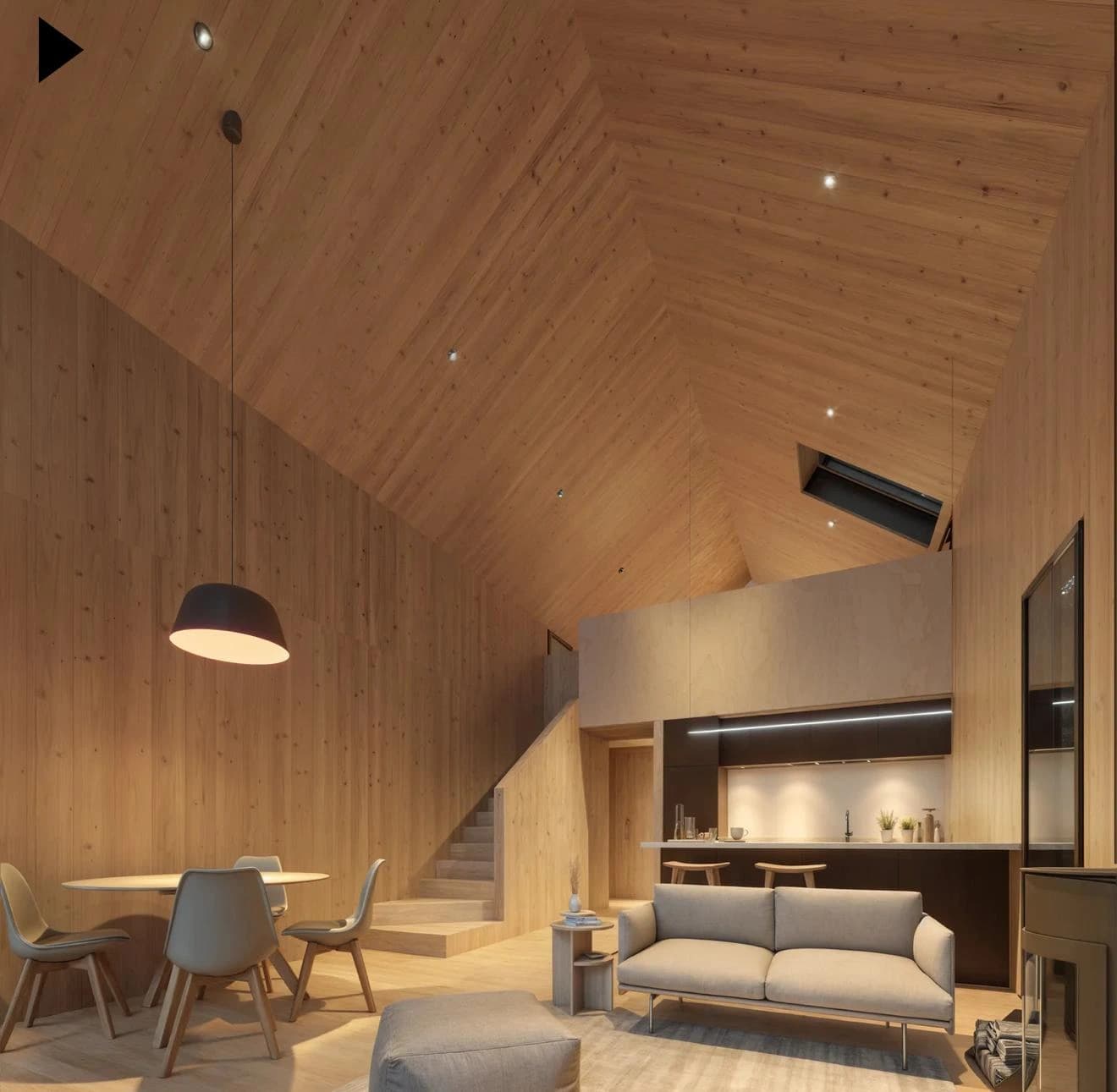
Natural materials aren't just aesthetic choices in dome and cabin design — they're functional decisions that affect health, durability, and connection to place. Wood breathes and regulates humidity. Stone provides thermal mass. Natural textiles feel better against skin than synthetics.
Understanding these materials helps you make informed choices that serve both beauty and function.
Why Natural Materials Matter
Health Benefits
Natural materials contribute to healthier indoor environments:
Air quality: Wood and natural textiles don't off-gas volatile organic compounds (VOCs) like many synthetic materials. They absorb and release moisture, helping regulate humidity.
Biophilic response: Humans evolved surrounded by natural materials. Research shows that wood-rich environments lower blood pressure, reduce stress, and improve cognitive function.
Acoustic comfort: Natural materials absorb sound better than hard synthetics, creating quieter, more peaceful spaces.
Durability and Aging
Quality natural materials outlast synthetic alternatives:
Wood develops character with age—a patina that tells the story of use. Scratches and wear become features, not flaws.
Stone is essentially eternal. Properly installed, it requires no replacement.
Natural textiles (wool, linen, leather) age gracefully, becoming softer and more beautiful over decades.
Connection to Place
Natural materials connect buildings to their landscapes:
Local wood ties a structure to its surrounding forest — whether a traditional cabin or a geodesic dome.
Regional stone echoes the geological character of the land.
Natural textiles reference pastoral traditions of the region.
This connection creates authenticity that imported or synthetic materials can't replicate.
Wood: The Foundation Material
Wood dominates cabin and dome interiors for good reason. It's warm, workable, renewable, and beautiful. Different species serve different purposes.
Softwoods
Pine
- Most common cabin wood
- Light color with visible grain
- Affordable and widely available
- Develops golden patina with age
- Best for: Paneling, trim, furniture, structural
Cedar
- Naturally rot and insect resistant
- Distinctive aromatic quality
- Reddish-brown color
- More expensive than pine
- Best for: Exterior applications, saunas, closets
Fir
- Strong structural wood
- Tight grain, less knotty than pine
- Takes stain well
- Moderate price
- Best for: Flooring, beams, structural elements
Hardwoods
Oak
- Classic hardwood, extremely durable
- Prominent grain pattern
- Takes stain beautifully
- Higher cost
- Best for: Flooring, furniture, cabinetry
Birch
- Light colored, fine grain
- Common in Scandinavian design
- Excellent for plywood
- Moderate cost
- Best for: Furniture, cabinets, accent pieces
Walnut
- Rich, dark color
- Luxurious feel
- Premium pricing
- Best for: Furniture accents, special pieces
Maple
- Very hard, light colored
- Subtle grain
- Excellent durability
- Best for: Flooring, butcher blocks, high-wear areas
Wood Finishes
How you finish wood affects both appearance and longevity:
Natural oil (tung, linseed)
- Penetrates wood, enhances grain
- Matte, natural appearance
- Requires periodic reapplication
- Allows wood to breathe
- Best for: Furniture, indoor applications
Wax
- Soft sheen
- Easy to apply and repair
- Less durable than other finishes
- Best for: Low-wear surfaces, antiques
Water-based polyurethane
- Clear, durable protection
- Low VOC options available
- Some plastic appearance
- Best for: Flooring, high-traffic areas
Soap finish (Scandinavian tradition)
- Very natural, matte appearance
- Wood grain fully visible
- Requires regular maintenance
- Best for: Floors, tables in traditional Nordic style
Whitewash/lime wash
- Lightens wood while showing grain
- Traditional Nordic technique
- Maintains natural texture
- Best for: Walls, ceilings, furniture wanting lighter appearance
Wood Application by Location
Floors: Oak, maple, or fir. Wide planks read more rustic; narrow planks more refined. Consider durability needs—bedrooms can use softer woods than living areas.
Walls: Pine paneling (traditional), reclaimed wood (character), or strategic accent walls. Full wood walls can feel dark; balance with light colors.
Ceilings: Exposed beams add drama. Tongue-and-groove planking creates warmth. Paint white to raise perceived height in lower spaces.
Furniture: Match or complement floor wood. Solid wood construction shows joinery; veneers work for some applications.
Trim and details: Consistent species creates cohesion. Contrasting trim (dark against light or vice versa) adds definition.
Stone: Permanence and Mass
Stone grounds interior design with weight, permanence, and geological connection.
Stone Types
Granite
- Extremely hard and durable
- Speckled appearance
- Heat and scratch resistant
- Higher cost
- Best for: Countertops, exterior applications
Slate
- Layered, textured surface
- Gray, green, purple tones
- Naturally clefted or honed smooth
- Moderate cost
- Best for: Flooring, feature walls
Limestone
- Soft, warm appearance
- Creams, grays, tans
- Can scratch and stain
- Moderate cost
- Best for: Fireplaces, wall cladding
Soapstone
- Soft, workable stone
- Smooth, almost soapy feel
- Darkens with age and oil
- Heat resistant
- Best for: Countertops, wood stove surrounds
River rock/fieldstone
- Rounded, natural shapes
- Collected locally
- Rustic appearance
- Variable cost (free if collected, expensive if purchased)
- Best for: Fireplaces, exterior features
Quartzite
- Very hard, durable
- Marble-like appearance
- Wide color range
- Premium cost
- Best for: Countertops seeking durability with beauty
Stone Applications
Fireplaces: Stone fireplace surrounds are signatures of mountain retreats. Floor-to-ceiling stone makes dramatic statement. Consider:
- Local stone for authenticity
- Scale appropriate to room
- Hearth extension for safety and visual grounding
Countertops: Kitchen and bath surfaces. Priorities differ:
- Kitchen: Durability, heat resistance, maintenance
- Bath: Water resistance, appearance, feel
Flooring: Stone floors are durable but hard and cold. Solutions:
- Radiant heating underneath (strongly recommended)
- Area rugs for comfort zones
- Stone in entry/wet areas, wood elsewhere
Feature walls: Accent walls in stone create focal points. Best used:
- Behind fireplaces
- Entry areas
- Single dramatic wall, not overwhelming
Exterior: Foundations, pathways, retaining walls benefit from local stone that connects building to land.
Sourcing Considerations
Local stone connects buildings to specific places. Quarries within driving distance provide regionally appropriate material.
Reclaimed stone from old buildings carries history and character. Often more expensive but environmentally preferable to new quarrying.
Ethical sourcing matters. Some stone comes from problematic operations. Ask suppliers about origins.
Natural Textiles: Softness and Warmth
Textiles provide the soft layer essential for comfort. Natural fibers outperform synthetics in feel, durability, and sustainability.
Wool
Characteristics:
- Naturally insulating (warm in winter, cool in summer)
- Moisture-wicking
- Naturally flame resistant
- Resists stains and odors
- Durable, long-lasting
Applications:
- Blankets and throws (essential for hygge)
- Area rugs (warmth underfoot)
- Upholstery (durable, ages beautifully)
- Curtains (insulating, light-blocking)
Care: Wool is easier than people think. Most items need only airing. Spot clean when needed. Professional cleaning for large items.
Sourcing: Look for:
- Origin (New Zealand, Scotland, local)
- Processing (organic, ethically raised)
- Weave quality
Linen
Characteristics:
- Strongest natural fiber
- Highly breathable
- Becomes softer with washing
- Naturally anti-bacterial
- Wrinkles (which many consider part of its charm)
Applications:
- Bedding (excellent temperature regulation)
- Curtains (light-filtering, breezy)
- Table linens
- Slipcovers (durable, washable)
Care: Machine washable. Actually improves with washing. Embrace wrinkles or iron if preferred.
Cotton
Characteristics:
- Soft, breathable
- Washable, easy care
- Widely available
- Less durable than linen or wool
- Affordable
Applications:
- Bedding (especially sheets)
- Kitchen textiles
- Casual curtains
- Everyday throws
Care: Easy—machine wash, tumble dry. Look for organic cotton to avoid pesticide concerns.
Leather
Characteristics:
- Extremely durable (decades of life)
- Develops beautiful patina
- Easy to clean
- Temperature adaptive
- Premium material
Applications:
- Seating (sofas, chairs)
- Accent pillows
- Storage containers
- Small goods
Care: Occasional conditioning prevents drying. Wipe spills quickly. Age and wear are features, not flaws.
Sourcing Ethical Textiles
Questions to ask:
- Where was this produced?
- How were animals treated?
- What chemicals were used?
- Are workers treated fairly?
Certifications to look for:
- GOTS (Global Organic Textile Standard)
- OEKO-TEX (tested for harmful substances)
- Responsible Wool Standard
- B Corp certified companies
Bringing Materials Together
Creating Cohesion
Color palette: Natural materials already harmonize—browns of wood, grays of stone, creams of textiles. Let materials be the color story.
Texture variety: Smooth wood, rough stone, soft wool, crisp linen. Variety creates interest; cohesion creates calm.
Scale consideration: Heavy materials (stone) ground spaces. Light materials (textiles) soften. Wood bridges the two.
Common Mistakes
Too much of one thing: All wood feels overwhelming. All stone feels like a cave. Balance matters.
Fighting materials: Orange-toned wood with cool gray stone creates tension. Ensure undertones work together.
Over-refinement: Too much polish removes the organic quality that makes natural materials special. Some rough texture is good.
Synthetic intrusions: One plastic element can undermine an otherwise natural space. Consistency matters.
Maintenance and Longevity
Wood Care
Regular:
- Dust with soft cloth
- Clean spills promptly
- Use coasters under drinks
Periodic:
- Re-oil oiled surfaces (annually or as needed)
- Touch up scratches with matching products
- Refinish high-wear areas when needed
Stone Care
Regular:
- Wipe with damp cloth
- Use appropriate cleaners (pH neutral for most stone)
- Seal porous stones regularly (limestone, marble)
Avoid:
- Acidic cleaners
- Abrasive scrubbing
- Letting spills sit
Textile Care
Regular:
- Vacuum rugs and upholstery
- Rotate cushions
- Air blankets and linens
Periodic:
- Professional cleaning for large items
- Wash linens and cotton regularly
- Condition leather annually
Sustainability Considerations
Environmental Impact
Wood: Sustainable when from managed forests. Look for FSC certification. Reclaimed wood is excellent choice.
Stone: Quarrying has impact. Local sourcing reduces transportation. Reclaimed stone avoids new quarrying.
Textiles: Organic and sustainable sourcing matters. Durability means less replacement and waste.
Longevity as Sustainability
The most sustainable choice is often the one that lasts longest. A wool rug that serves for 50 years has lower lifetime impact than five synthetic rugs that each last 10 years.
Buy quality, buy once. Natural materials support this approach better than synthetics.
Build with Intention
Natural materials require more thought than grabbing what's cheapest at the home store. They require understanding sources, considering maintenance, and investing upfront for long-term value.
The reward is spaces that feel alive, age beautifully, and connect you to the natural world even when indoors. Wood that breathes, stone that grounds, textiles that comfort—these materials have supported human shelter for millennia because they work.
Experience natural materials thoughtfully applied. Join our VIP list for early access to LuxeDen Resorts, opening Summer 2027 — glamping domes built with wood, stone, and textiles chosen for beauty, durability, and connection to the Idaho landscape.