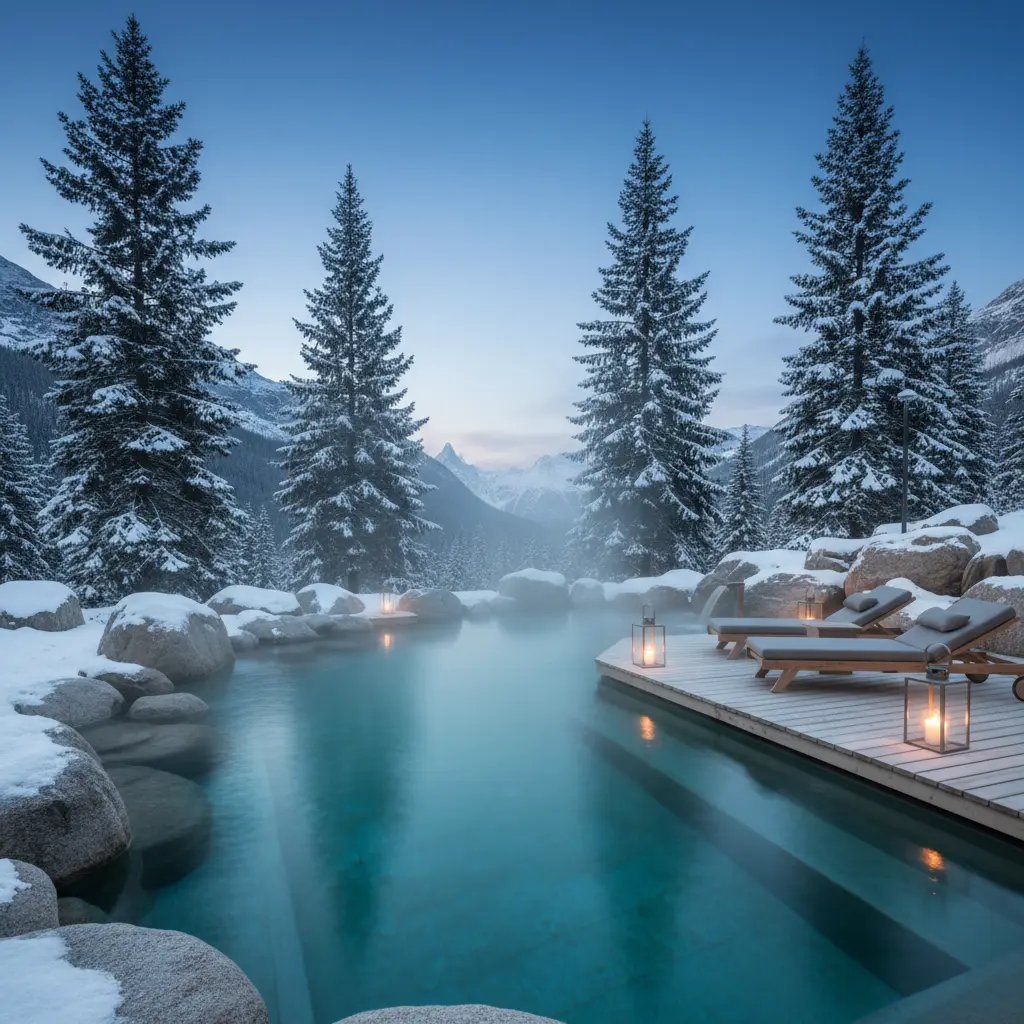
Nordic wellness isn't a trend—it's a tradition spanning centuries. From Finnish saunas to Icelandic geothermal pools to Norwegian cold plunges, Scandinavian cultures have long understood what modern science is now confirming: thermal water practices profoundly benefit human health.
This guide explores the science behind hot springs, saunas, and contrast therapy—and how to incorporate these practices into your own wellness routine.
What is Nordic Wellness?
Nordic wellness encompasses the health traditions of Scandinavian and Northern European cultures, centered on three core elements:
- Thermal water immersion - Hot springs, heated pools, saunas
- Contrast therapy - Alternating between hot and cold exposure
- Nature connection - Outdoor practice, forest settings, natural environments
Unlike spa treatments focused on pampering, Nordic wellness is functional. It's about physiological adaptation, immune response, and mental clarity. The practices are simple, the benefits are measurable, and the tradition has endured because it works.
The philosophy behind it:
Nordic cultures developed in harsh climates where wellness wasn't optional—it was survival. Long, dark winters demanded practices that maintained physical health and mental resilience. What emerged wasn't luxury; it was necessity refined into tradition.
Today, as chronic stress, sedentary lifestyles, and constant connectivity erode health worldwide, these ancient practices offer something our modern environment lacks: genuine physiological reset.
How Hot Springs Heal: The Science
Hot springs aren't just pleasant—they trigger measurable physiological responses that benefit nearly every body system.
Vascular Gymnastics & Immune Activation
When you immerse in hot water (100-104°F), your blood vessels dilate. Blood flows to the skin's surface, heart rate increases, and circulation accelerates throughout your body.
This "vascular gymnastics" effect does more than warm you up:
- White blood cell production increases - Studies show regular hot spring users have 30-40% higher white blood cell counts
- Lymphatic circulation improves - Enhanced waste removal from tissues
- Inflammatory markers decrease - Heat triggers anti-inflammatory responses
The immune boost isn't temporary. Research indicates that consistent thermal water practice (2-3 times weekly) maintains elevated immune function between sessions.
Mineral Absorption Through Skin
Natural hot springs contain dissolved minerals that enter your body through transdermal absorption. While you won't get your daily vitamins from soaking, mineral hot springs deliver therapeutic concentrations of specific elements:
Calcium
- Supports bone density and muscle function
- Aids nerve signal transmission
- Absorbed more efficiently through skin than gut in some cases
Magnesium
- Promotes muscle relaxation and reduces cramping
- Supports sleep quality and stress response
- Deficiency is common; soaking helps restore levels
Sulfur
- Reduces joint inflammation
- Supports collagen production
- Historically used for arthritis and skin conditions
Silica
- Improves skin elasticity
- Supports connective tissue health
- Contributes to hair and nail strength
Potassium
- Balances electrolytes
- Supports heart rhythm
- Aids muscle recovery
The mineral profile varies by spring—volcanic hot springs differ from limestone aquifer sources. Burgdorf Hot Springs near McCall, Idaho, for example, contains high sulfur content that gives its waters particular benefit for joint and skin health.
Cardiovascular Benefits
Soaking in hot water is gentle cardiovascular exercise. Your heart rate increases 20-30% (similar to a brisk walk), blood vessels expand, and circulation improves throughout your body.
Research has documented:
- Improved endothelial function - Blood vessel walls become more flexible
- Reduced blood pressure - Both during soaking and for hours afterward
- Enhanced circulation to extremities - Particularly beneficial for those with poor circulation
A 20-minute soak delivers cardiovascular stimulus comparable to moderate exercise—without the mechanical stress on joints. For those with mobility limitations, this is significant.
Stress Reduction & Cortisol Regulation
The stress reduction from hot water immersion isn't just psychological—it's biochemical.
What happens in your body:
- Warm water triggers parasympathetic nervous system activation (rest-and-digest mode)
- Cortisol (stress hormone) levels drop within minutes
- Serotonin and endorphin production increase
- Heart rate variability improves (a marker of stress resilience)
These effects persist for 4-6 hours after soaking. Regular practice appears to lower baseline cortisol levels, meaning practitioners maintain lower stress even on days they don't soak.
Sleep Quality Improvement
Hot water soaking before bed is one of the most effective natural sleep interventions available.
The mechanism:
Your body temperature naturally drops as you approach sleep. Soaking raises core temperature; when you exit the water, temperature drops rapidly. This accelerated cooling signals your body that sleep is coming, triggering melatonin release and faster sleep onset.
Optimal timing:
Soak 2-3 hours before intended sleep. Soaking immediately before bed can be too stimulating—the temperature drop needs time to occur.
Research findings:
- Sleep onset reduced by 10-15 minutes on average
- REM sleep duration increased
- Sleep quality self-reports significantly improved
- Benefits observed even in those without sleep disorders
Skin & Dermatological Benefits
Mineral-rich thermal water has documented benefits for various skin conditions:
- Psoriasis - Sulfur and silica content reduces inflammation and scaling
- Eczema - Mineral absorption soothes irritation
- Acne - Improved circulation and mineral content support healing
- General skin health - Enhanced collagen production, improved elasticity
The combination of heat (increasing blood flow to skin) and minerals (providing raw materials for repair) creates conditions for accelerated skin healing.
Pain Relief & Joint Health
For arthritis and chronic pain sufferers, hot springs offer meaningful relief:
Heat effects:
- Increased blood flow to painful areas
- Muscle relaxation reduces tension-related pain
- Joint stiffness decreases with warmth
Buoyancy effects:
- Water supports body weight, reducing joint load
- Movement becomes easier, allowing gentle exercise
- Range of motion improves in warm water
Mineral effects:
- Sulfur reduces inflammation
- Magnesium relaxes muscles
- Combined effect exceeds heat alone
Studies show 50-70% pain reduction in arthritic patients following consistent hot spring therapy. While not a cure, thermal water provides meaningful quality-of-life improvement.
Contrast Therapy: The Hot-Cold Cycle
Contrast therapy—alternating between heat exposure and cold immersion—amplifies the benefits of thermal water alone. This practice is central to Finnish sauna tradition and increasingly supported by research.
How Contrast Therapy Works
When you move from hot to cold:
- Blood vessels constrict rapidly (vasoconstriction)
- Blood rushes to core organs to protect vital functions
- Norepinephrine surges (2-3x normal levels)
- Inflammation decreases throughout the body
When you return to heat:
- Blood vessels dilate (vasodilation)
- Blood flows back to extremities and skin
- Heart pumps harder to manage the shift
- Lymphatic system activates for waste removal
This "pumping" action—vessels expanding and contracting—is the vascular gymnastics that strengthens your circulatory system over time.
The Protocol
Traditional Finnish contrast therapy follows a specific pattern:
Sauna phase:
- Temperature: 80-100°C (175-212°F)
- Duration: 15-20 minutes
- Until sweating is established and you feel ready
Cold phase:
- Temperature: 5-15°C (40-60°F)
- Duration: 30 seconds to 3 minutes
- Full immersion if possible; cold shower as alternative
Rest phase:
- Room temperature, seated or reclined
- Duration: 5-10 minutes
- Hydrate during this phase
Repeat:
- 3-4 complete cycles is traditional
- End on cold for energizing effect
- End on heat for relaxing effect
Benefits of Contrast Practice
Immune function: Regular contrast therapy practitioners show elevated white blood cell counts and reduced illness frequency. The stress of temperature shifts triggers adaptive immune responses.
Mood and mental health: Cold exposure releases norepinephrine, a neurotransmitter involved in attention, focus, and mood. Regular practitioners report improved mental clarity and reduced depression symptoms.
Recovery: Athletes use contrast therapy to accelerate recovery. The circulatory pump reduces inflammation and clears metabolic waste from muscles faster than passive rest.
Metabolic effects: Brown fat activation from cold exposure increases metabolic rate. While not a weight loss solution, contrast therapy does increase caloric expenditure.
Safety Considerations
Contrast therapy isn't appropriate for everyone:
Avoid if you have:
- Uncontrolled high blood pressure
- Recent heart attack or unstable cardiovascular disease
- Pregnancy (hot phases, especially)
- Raynaud's disease (cold phases)
- Open wounds or active infections
Start gradually:
- Begin with shorter hot phases and warmer cold phases
- Increase intensity over weeks, not days
- Listen to your body—dizziness or discomfort means stop
Hydrate:
- Drink water before, during, and after
- Avoid alcohol (impairs temperature regulation)
- Replace electrolytes if sweating heavily
The Finnish Sauna Tradition
Finland has 3.3 million saunas for 5.5 million people—roughly one sauna per household. This isn't coincidence; it's cultural priority rooted in documented health benefits.
History & Cultural Significance
Saunas have been central to Finnish life for over 2,000 years. Historically, saunas served as:
- Birthing rooms (warmest, cleanest space available)
- Treatment spaces for illness
- Social gathering places
- Spiritual cleansing sites
Today, business deals are still made in saunas. Families gather weekly for sauna nights. The practice isn't separate from life—it's woven into daily existence.
Types of Saunas
Traditional wood-fired (savusauna)
- Heated by burning wood
- Temperatures reach 80-110°C
- Soft, enveloping heat
- Considered most authentic
Electric sauna
- Heated by electric element
- Consistent, controllable temperature
- Most common in modern homes
- Easier to maintain
Infrared sauna
- Uses infrared light to heat body directly
- Lower air temperatures (50-65°C)
- Deeper tissue penetration claimed
- Not traditional but increasingly popular
Steam room (not technically sauna)
- High humidity, lower temperature
- Different physiological effects
- Beneficial but distinct from dry sauna
Sauna Etiquette
Finnish sauna culture has clear norms:
- Silence is valued - Conversation is fine but not required
- Nudity is normal - Towels for sitting, not covering
- Respect the space - Keep voices low, movements calm
- Water on stones (löyly) - Creates steam bursts; ask before adding
- Take breaks - Leave and return as needed
- Shower first - Enter clean
- No phones - This is disconnection time
Health Benefits of Regular Sauna Use
Research on Finnish populations (who use saunas frequently) shows:
Cardiovascular:
- 40% reduced risk of cardiovascular death (4-7 sessions/week vs. 1)
- Improved blood vessel function
- Reduced blood pressure over time
Cognitive:
- 65% reduced risk of dementia (4-7 sessions/week)
- Improved memory and attention
- Possible Alzheimer's prevention
Respiratory:
- Reduced incidence of pneumonia
- Improved lung function
- Relief from asthma symptoms
Longevity:
- All-cause mortality significantly reduced
- Effect increases with frequency
- Benefits observed across age groups
These findings come from large-scale studies following thousands of Finnish men and women over decades. The correlations are strong enough that researchers consider sauna use a legitimate health intervention.
Mineral Water Healing: Nature's Medicine Cabinet
Not all water is created equal. Natural hot springs contain dissolved minerals accumulated over centuries of geological activity. Understanding these minerals helps you choose springs aligned with your health goals.
How Minerals Enter Your Body
Transdermal absorption—minerals passing through skin into bloodstream—is real but limited. You won't replace oral supplements by soaking. However:
- Certain minerals absorb efficiently through skin (magnesium, sulfur)
- Concentration matters - Hot springs have higher concentrations than tap water
- Duration matters - Longer soaks increase absorption
- Skin condition matters - Healthy skin absorbs better
The therapeutic effect combines mineral absorption with heat, pressure, and buoyancy. Isolating one factor misses the synergy.
Common Mineral Profiles
Sulfur springs:
- Distinctive "rotten egg" smell
- Anti-inflammatory properties
- Particularly beneficial for skin conditions and joint pain
- Example: Burgdorf Hot Springs, Idaho
Silica springs:
- Often associated with geothermal activity
- Skin softening and anti-aging properties
- May support bone and connective tissue
- Example: Blue Lagoon, Iceland
Bicarbonate springs:
- Alkaline pH
- May aid digestion and skin pH balance
- Often feels "slippery"
- Example: Evian region springs
Salt springs:
- High sodium chloride content
- Buoyancy increases (floating easier)
- Skin cleansing properties
- Example: Dead Sea
Choosing Your Springs
Match spring type to your goals:
| Goal | Best Spring Type | |------|-----------------| | Joint pain | Sulfur, high mineral | | Skin conditions | Sulfur, silica | | Stress relief | Any warm spring | | Muscle recovery | Magnesium-rich | | General wellness | Any natural hot spring |
Digital Detox & Nature Connection
Nordic wellness isn't just about water temperature—it's about disconnection from modern stressors and reconnection with natural environments.
The Case for Unplugging
Modern life subjects us to constant stimulation: notifications, news, social media, email. This perpetual alertness maintains elevated cortisol and prevents the deep rest our bodies require.
What screens do to us:
- Blue light disrupts circadian rhythm
- Notifications trigger stress responses
- Comparison culture elevates anxiety
- Constant input prevents processing
What nature does for us:
- Soft fascination (natural scenes) restores attention
- Fresh air and natural light regulate sleep
- Absence of notifications allows nervous system reset
- Physical environment promotes movement
Forest Bathing (Shinrin-yoku)
While Japanese in origin, forest bathing aligns perfectly with Nordic wellness philosophy. The practice is simple: spend time in forest environments, engaging all senses.
Research findings:
- Cortisol levels drop within 15 minutes of forest exposure
- Blood pressure decreases
- Immune function improves (natural killer cells increase)
- Mood elevation persists for days after forest time
Combined with thermal water, forest settings amplify wellness benefits. This is why traditional hot springs are often found in natural, forested locations—the combination isn't coincidental.
Creating Your Detox Protocol
A meaningful digital detox doesn't require a week in the wilderness. Even brief disconnection delivers benefits:
Micro-detox (daily):
- Phone-free morning routine (first hour)
- No devices during meals
- Phone outside bedroom at night
Mini-detox (weekly):
- One full day without social media
- Extended time outdoors
- Thermal water session if accessible
Full detox (periodically):
- Multi-day retreat with limited connectivity
- Immersive nature environment
- Daily thermal water practice
- Digital fast (emergency contact only)
Building Your Nordic Wellness Practice
You don't need to move to Finland or live near hot springs to benefit from Nordic wellness principles. Here's how to start:
At-Home Options
Hot bath ritual:
- Water temperature 100-104°F
- Add Epsom salts (magnesium) or mineral bath products
- 20-30 minute soak
- Dim lighting, no devices
- Follow with cool (not cold) shower
Contrast showers:
- End regular shower with 30-60 seconds cold
- Gradually increase cold duration over weeks
- Work toward 2-3 minutes cold tolerance
Infrared sauna:
- Home units available ($150-5,000 range)
- Lower space/temperature requirements than traditional
- 20-40 minute sessions
Cold exposure:
- Cold showers (free, immediate)
- Ice baths (affordable, intense)
- Cold plunge tubs (investment, convenient)
Destination Wellness
For deeper practice, seek out authentic hot springs and sauna experiences:
What to look for:
- Natural mineral water (not chlorinated pools)
- Outdoor settings when possible
- Quiet, contemplative atmosphere
- Cold plunge or contrast options
- Minimal phone/tech presence
Red flags:
- Loud music or party atmosphere
- Heavily chlorinated water
- No natural water source
- Constant device use around pools
The McCall, Idaho Option
The mountains of central Idaho offer accessible Nordic wellness in an American setting:
Burgdorf Hot Springs:
- 30 miles from McCall
- Natural mineral water, 100°F+
- Rustic cabins available
- Winter access by snowmobile only
- Authentic, undeveloped experience
Regional hot springs:
- Gold Fork Hot Springs (developed, family-friendly)
- Trail Creek Hot Springs (primitive, hike-in)
- Multiple other options within 50-mile radius
Coming 2027: Luxe Den Resorts:
- Private mineral soaking tubs at each cabin
- Finnish-style sauna
- Cold plunge facilities
- Forest setting with mountain views
- Designed specifically for Nordic wellness practice
Common Questions About Thermal Wellness
How often should I practice?
Research suggests 2-4 sessions weekly provides measurable health benefits. Daily practice is traditional in Nordic cultures and appears safe for healthy individuals. Start with 1-2 weekly sessions and increase as your body adapts.
How long should sessions last?
Hot water immersion: 15-30 minutes per session Sauna: 15-20 minutes per round, 3-4 rounds with breaks Contrast therapy: 3-4 complete cycles (hot-cold-rest)
Listen to your body. Dizziness, nausea, or excessive fatigue means you've overdone it.
Is it safe during pregnancy?
Hot tubs and saunas are generally not recommended during pregnancy, particularly in the first trimester. Elevated core temperature may affect fetal development. Consult your healthcare provider.
Can I practice with high blood pressure?
Moderate thermal exposure may actually benefit blood pressure over time. However, contrast therapy (particularly cold plunges) can cause blood pressure spikes. Start with heat-only practice and consult your doctor before adding cold exposure.
What about alcohol?
Alcohol impairs temperature regulation and dehydrates you—both dangerous during thermal practice. Save drinks for after your session, and hydrate with water during practice.
Do I need special equipment?
No. A bathtub, access to a gym sauna, or proximity to natural hot springs is sufficient to begin. Equipment can enhance practice but isn't required.
Begin Your Nordic Wellness Journey
Nordic wellness isn't complicated. Heat, cold, water, nature, rest—these elements have supported human health for millennia. Modern research confirms what traditional cultures knew intuitively: regular thermal practice benefits body and mind.
You don't need to travel to Scandinavia or invest in expensive equipment. Start with what's available: a hot bath, a cold shower, time outside. Build from there.
For those seeking immersive experience, destinations like McCall, Idaho offer natural hot springs in wilderness settings—Nordic wellness in an American landscape.
Ready to experience Nordic wellness in the Idaho mountains? Join our VIP list for exclusive early access to Luxe Den Resorts, opening Summer 2027. Private mineral soaking tubs, Finnish saunas, and forest settings designed for authentic thermal wellness practice.