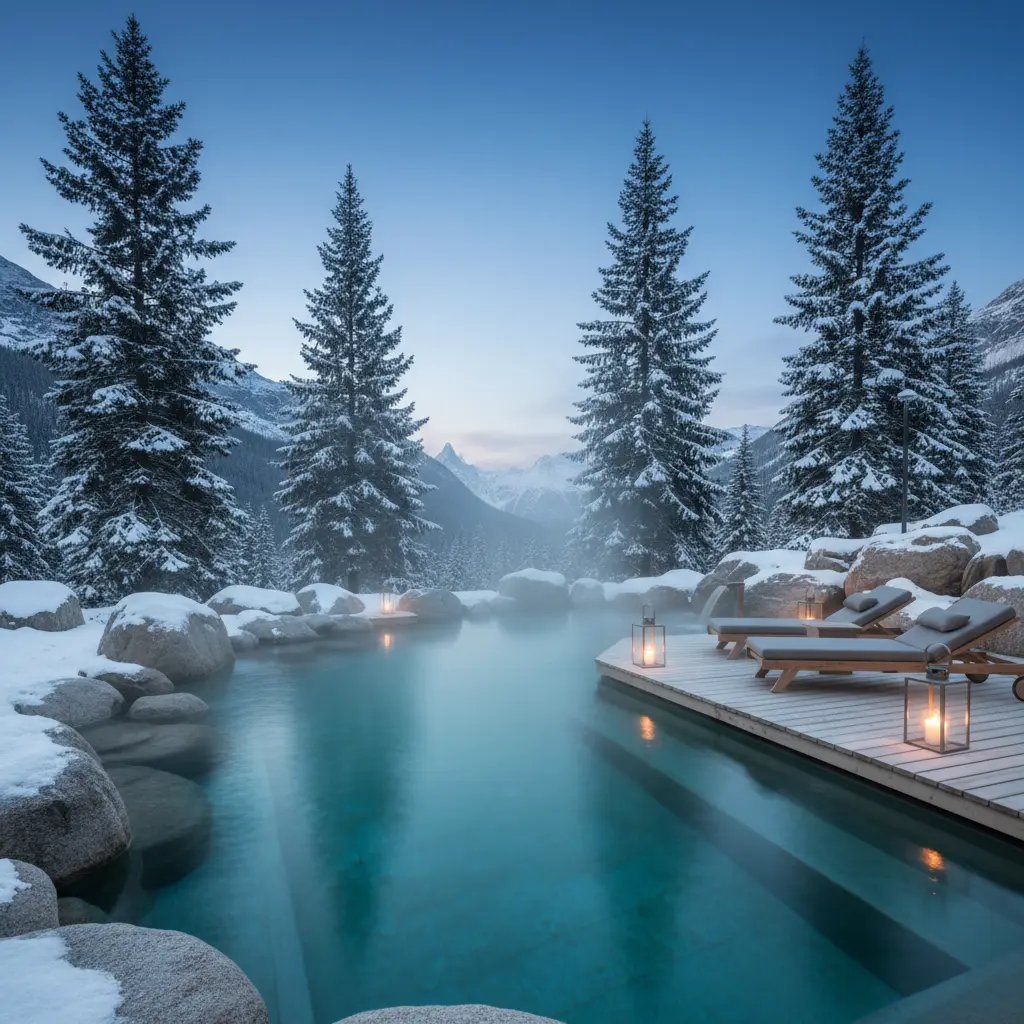
Hot springs have drawn humans for thousands of years. Ancient Romans built elaborate bathhouses around thermal waters. Japanese onsen culture dates back centuries. Indigenous peoples across the Americas recognized hot springs as sacred healing sites.
But does soaking in hot mineral water actually improve health, or is this just pleasant tradition? Modern research says it's both—and the benefits are more significant than you might expect.
What Happens When You Enter Hot Water
The moment you immerse in water above 98°F, your body begins responding. Understanding these responses explains why hot springs feel so restorative.
Immediate Cardiovascular Response
Within seconds of entering hot water, your cardiovascular system activates:
Blood vessels dilate - Vasodilation increases blood flow to skin and extremities. Your body is attempting to release heat.
Heart rate increases - Typically 20-30% above resting rate. A 20-minute soak provides cardiovascular stimulus similar to moderate walking.
Blood pressure initially rises, then falls - The initial response to heat raises pressure briefly; sustained immersion then lowers it as vessels relax.
This "passive cardiovascular exercise" is particularly valuable for those with mobility limitations. The heart and circulatory system get a workout without mechanical stress on joints.
Temperature Regulation Cascade
Your body treats hot water immersion as a controlled stress requiring adaptation:
Core temperature rises - Typically 1-2°F during a 20-minute soak Sweating begins - Even underwater, your body attempts cooling Metabolic rate increases - Energy expenditure rises to manage temperature Immune activation triggers - Your body interprets the heat as a mild fever state
This last point is crucial. The mild hyperthermia (elevated body temperature) from hot water soaking triggers immune responses similar to actual fever—without the illness.
Immune System Activation
The immune benefits of regular hot spring use are among the most studied and documented effects.
White Blood Cell Production
Research consistently shows that thermal water exposure increases white blood cell counts:
- Leukocyte levels rise during and after soaking
- Lymphocyte activity increases - These cells identify and destroy pathogens
- Natural killer cell function improves - Important for cancer surveillance and viral defense
Studies comparing regular hot spring users to non-users found 30-40% higher white blood cell counts in the soaking group. This wasn't temporary fluctuation—the elevated immune function persisted between sessions.
The Mechanism: Controlled Stress Response
Why would hot water boost immunity? The answer lies in hormesis—the principle that mild stressors trigger beneficial adaptations.
Your body interprets elevated temperature as a threat requiring response. It upregulates immune function, increases heat shock protein production, and enhances cellular repair mechanisms. These adaptations persist after the "threat" (hot water) is removed.
Regular exposure trains your immune system to respond efficiently. It's exercise for your defense mechanisms.
Frequency Matters
The immune benefits require consistency:
- Occasional soaking (once monthly) provides temporary effects
- Weekly soaking (1-2 times) shows measurable immune improvement
- Regular soaking (3-4 times weekly) maintains elevated immune baseline
Traditional hot spring cultures—where daily or near-daily soaking is normal—show the strongest health correlations.
Mineral Absorption: What Actually Enters Your Body
Natural hot springs contain dissolved minerals accumulated over geological time. The question of whether these minerals actually enter your body through skin has been studied extensively.
Transdermal Absorption Is Real
Your skin is not an impermeable barrier. It's a semi-permeable membrane that allows certain molecules to pass:
What absorbs well:
- Magnesium (crucial for muscle and nerve function)
- Sulfur compounds (anti-inflammatory properties)
- Some trace minerals in ionic form
What absorbs poorly:
- Large mineral molecules
- Minerals in certain chemical forms
- Anything blocked by the skin's lipid barrier
The warm water of hot springs enhances absorption by:
- Increasing blood flow to skin
- Opening pores
- Softening the outer skin layer
- Extending contact time
Key Minerals and Their Effects
Magnesium
Magnesium deficiency is remarkably common—an estimated 50% of Americans don't get adequate magnesium. Symptoms include muscle cramps, poor sleep, and elevated stress response.
Hot springs often contain significant magnesium, and transdermal absorption is efficient:
- Muscle relaxation improves within the soak
- Sleep quality improves for hours afterward
- Stress resilience increases with regular exposure
Sulfur
The distinctive "rotten egg" smell of some hot springs comes from sulfur compounds. While the smell takes adjustment, the benefits are documented:
- Anti-inflammatory effects on joints and muscles
- Skin condition improvements (psoriasis, eczema, acne)
- Collagen production support
- Detoxification pathway enhancement
Mineral-rich springs like those at Lava Hot Springs, Idaho have been used for joint and skin conditions for generations. Notably, the Lava Hot Springs pools are naturally free of sulfur odor despite their high mineral content — a rare combination that makes them particularly pleasant for regular therapeutic use.
Silica
Silica contributes to connective tissue health:
- Skin elasticity improvement
- Hair and nail strength
- Joint cartilage support
The famous Blue Lagoon in Iceland is known for silica-rich waters that leave skin remarkably soft.
Calcium and Potassium
These minerals support:
- Bone density maintenance
- Muscle function
- Electrolyte balance
- Heart rhythm regulation
While absorption is less efficient than magnesium, cumulative exposure contributes to mineral status.
Stress Reduction: Beyond Relaxation
The stress relief from hot springs isn't merely psychological—it's measurable biochemical change.
Cortisol Reduction
Cortisol, the primary stress hormone, drops significantly during hot water immersion:
- Levels begin falling within 10-15 minutes
- Reduction persists for 4-6 hours post-soak
- Regular soakers show lower baseline cortisol
Chronically elevated cortisol contributes to:
- Weight gain (especially abdominal)
- Sleep disruption
- Immune suppression
- Cognitive impairment
- Mood disorders
Anything that reliably lowers cortisol—without side effects—has significant health value.
Parasympathetic Activation
Your autonomic nervous system has two modes:
- Sympathetic (fight-or-flight): activated by stress, danger, deadlines
- Parasympathetic (rest-and-digest): activated by safety, relaxation, recovery
Modern life keeps many people stuck in sympathetic dominance. Hot water immersion shifts the balance:
- Heart rate variability improves (a marker of nervous system flexibility)
- Digestion activates
- Muscle tension releases
- Mental chatter quiets
This isn't just feeling relaxed—it's physiological state change that allows genuine recovery.
Endorphin and Serotonin Release
Hot water triggers feel-good neurotransmitter release:
- Endorphins provide natural pain relief and mood elevation
- Serotonin supports emotional regulation and wellbeing
- Dopamine contributes to pleasure and motivation
The "afterglow" following a good soak is real neurochemistry, not imagination.
Sleep Quality Improvement
For those struggling with sleep, hot springs offer one of the most effective natural interventions available.
The Temperature Drop Mechanism
Your body temperature naturally falls as sleep approaches. This cooling signals melatonin release and sleep onset.
Hot water soaking artificially raises core temperature. When you exit, temperature drops rapidly—more rapidly than natural evening cooling. This accelerated drop:
- Signals strong sleep onset cues
- Increases melatonin production
- Shortens time to fall asleep
- Improves sleep architecture
Research Findings
Studies on pre-sleep bathing consistently show:
- Sleep onset reduced by 10-15 minutes average
- REM sleep increased in duration and quality
- Wake episodes decreased during the night
- Subjective sleep quality improved significantly
These benefits appear in both healthy sleepers and those with mild sleep difficulties.
Optimal Timing
Soak 2-3 hours before intended sleep. Immediate pre-bed soaking can be too stimulating—the temperature drop needs time to occur. The 2-3 hour window allows:
- Core temperature to peak during soak
- Cooling to begin as you dry off and wind down
- Maximum temperature drop to coincide with bedtime
Pain Relief and Joint Health
For arthritis sufferers and those with chronic pain, hot springs provide meaningful relief.
How Heat Relieves Pain
Increased blood flow - Warming tissue increases circulation, delivering nutrients and removing waste products Muscle relaxation - Heat reduces muscle tension that often accompanies or causes pain Nerve signal modification - Warmth alters pain signal transmission Endorphin release - Natural pain-killing compounds increase with heat exposure
Buoyancy Benefits
Water supports body weight, reducing load on painful joints:
- Spine decompresses
- Joint surfaces separate slightly
- Movement becomes easier
- Range of motion improves
For someone with knee arthritis, for example, a simple leg movement that's painful on land may be comfortable in water. This allows gentle exercise that would otherwise be avoided.
Research on Arthritis
Studies of rheumatoid and osteoarthritis patients using hot spring therapy show:
- 50-70% pain reduction during treatment periods
- Improved function scores on standard assessments
- Reduced medication use in some cases
- Benefits persisting weeks after treatment ends
Hot springs aren't a cure for arthritis, but they're a meaningful management tool with no negative side effects.
Mineral-Specific Benefits
Sulfur-rich springs provide additional anti-inflammatory effects beyond heat alone. The combination of warmth and mineral absorption addresses inflammation from multiple angles.
Skin and Dermatological Benefits
Your skin is the organ in direct contact with mineral water—and it responds accordingly.
Conditions That Improve
Psoriasis - Sulfur and silica reduce inflammation and scaling. Many psoriasis patients report significant improvement with regular hot spring use.
Eczema - Mineral absorption soothes irritation. The moisture environment helps compromised skin barrier.
Acne - Improved circulation and sulfur content support healing. Heat opens pores for better cleansing.
General aging - Collagen production increases with sulfur exposure. Silica supports skin elasticity. Circulation improvements enhance skin tone.
The Mechanism
Hot spring water benefits skin through:
- Mineral delivery - Direct absorption of skin-supporting minerals
- Circulation boost - Increased blood flow brings nutrients, removes waste
- Hydration - Extended water contact improves moisture content
- pH effects - Mineral waters often have beneficial pH for skin
Traditional Knowledge Confirmed
Cultures with hot spring traditions have long recognized skin benefits. Dermatological research has largely confirmed these observations, finding measurable improvements in skin condition markers following thermal water treatment.
Cardiovascular System Benefits
Regular hot spring use appears to benefit heart and circulatory health—though the mechanisms differ from traditional exercise.
Blood Vessel Function
Endothelial function - The cells lining blood vessels work more efficiently after thermal exposure. Vessels dilate and constrict more responsively.
Arterial flexibility - Blood vessel walls maintain elasticity better with regular heat exposure.
Circulation to extremities - Those with poor circulation (cold hands and feet) often report improvement.
Blood Pressure Effects
Acute effects: Blood pressure may rise briefly upon entering hot water, then falls during sustained immersion.
Chronic effects: Regular soakers show lower resting blood pressure. The repeated vasodilation may "train" vessels to relax more easily.
Important Cautions
Those with cardiovascular conditions should:
- Consult their doctor before hot spring use
- Avoid extremely hot temperatures (stay under 104°F)
- Enter and exit gradually
- Stay hydrated
- Avoid cold plunges without medical clearance
Hot springs can benefit cardiovascular health, but they also stress the system. Those with heart conditions need appropriate guidance.
How to Maximize Hot Spring Benefits
Understanding the science helps you optimize your soaking practice.
Temperature Sweet Spot
- 100-102°F - Comfortable for extended soaks, good mineral absorption
- 102-104°F - More intense cardiovascular response, limit to 15-20 minutes
- Above 104°F - Use caution, shorten duration, monitor how you feel
Natural hot springs vary in temperature. Find your comfortable zone and adjust duration accordingly.
Duration Guidelines
- Minimum effective dose: 15 minutes
- Optimal range: 20-30 minutes
- Maximum recommended: 45 minutes (at moderate temperatures)
Longer isn't always better. Excessive heat exposure can stress rather than restore.
Frequency for Benefits
- Occasional (monthly): Pleasant, temporary effects
- Regular (1-2 weekly): Measurable health improvements
- Frequent (3-4+ weekly): Maximum benefit, traditional pattern
Build up gradually. Your body adapts to thermal stress, allowing increased frequency over time.
Hydration Protocol
- Drink water before soaking
- Bring water to poolside if possible
- Drink again after exiting
- Avoid alcohol during soaking (impairs temperature regulation)
Sweating in hot water loses more fluid than you might realize. Dehydration undermines benefits.
Contrast Enhancement
Adding cold exposure after hot soaking amplifies benefits:
- Brief cold shower or plunge
- Increases vascular exercise
- Extends immune activation
- Enhances mood-boosting effects
Even a 30-second cold rinse after soaking provides benefit.
Experience the Benefits Yourself
The research is compelling, but the real proof is experiential. Hot springs deliver benefits you can feel—relaxed muscles, clearer mind, better sleep, improved mood.
If you're near natural hot springs, regular visits offer accessible, affordable wellness practice. If not, hot baths with mineral additives provide a reasonable substitute, though natural springs remain superior.
Lava Hot Springs, Idaho offers some of the finest natural mineral hot springs in the American West. The pools are fed by underground sources at 102-112°F, naturally rich in calcium, magnesium, potassium, lithium, and zinc — with no sulfur smell and no chemical treatment. For those seeking to build regular thermal water practice into their lives, few destinations make it easier.
Want to make hot springs a regular part of your wellness routine? Join our VIP list for early access to LuxeDen Resorts, opening Summer 2027 with private mineral soaking tubs at every glamping dome.
